Where Should You Place an Air Fryer in the Kitchen?
Choose a safe, practical air fryer location with enough ventilation, a heat-resistant counter, proper outlet access, and clearance from water and cabinets.
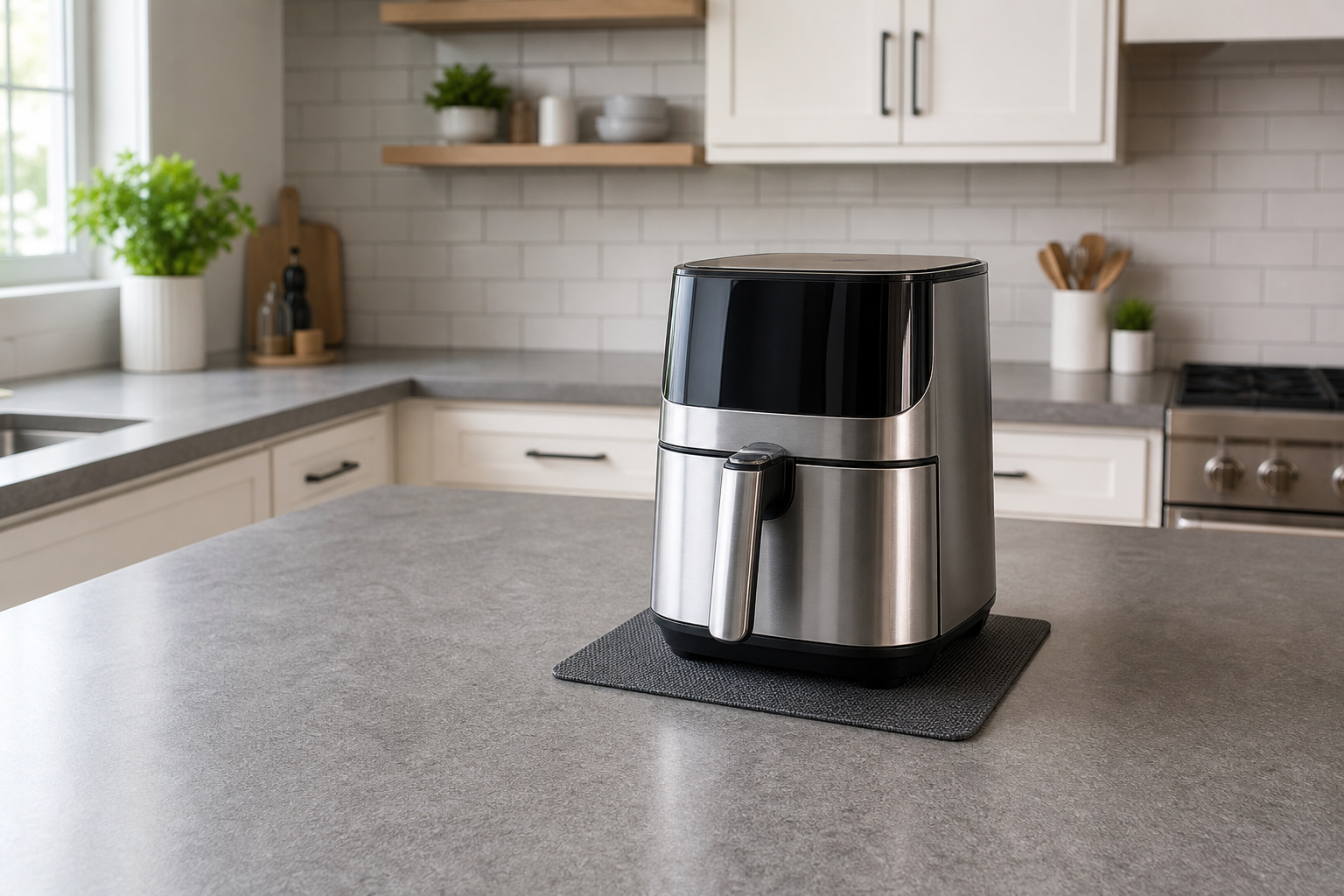
The best place for an air fryer is on a stable, level, heat-resistant countertop with open space around its air intake and exhaust. It should be close enough to a grounded wall outlet that the cord reaches without tension, yet safely away from the sink, stovetop, curtains, paper towels, and other heat-sensitive or flammable materials.
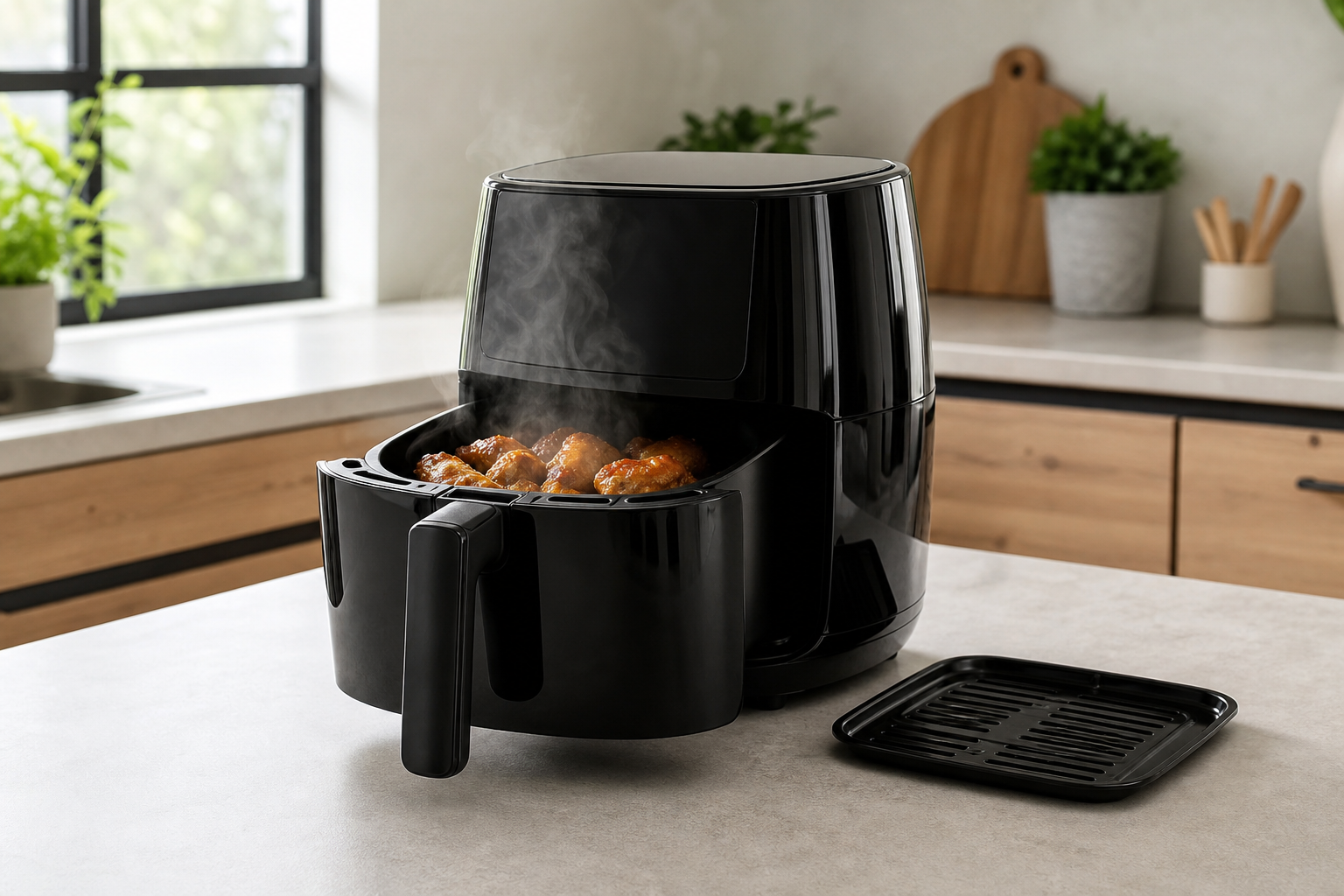
During cooking, an air fryer moves a large volume of hot air. Pushing it tightly under an upper cabinet or against a backsplash can trap heat and direct steam or grease toward surfaces. Pull the appliance forward into a clear working position and follow the exact clearance stated in its manual; requirements vary by model.
A convenient storage spot is not always a safe operating spot. You can store the fryer elsewhere if counter space is limited, but place it correctly before every use and let it cool completely before moving it.
Use a Stable, Heat-Resistant Counter
Choose a flat counter that can support the appliance and a loaded basket without wobbling. Stone, tile, and many properly installed solid-surface counters are practical, but heat tolerance differs. Laminate, wood finishes, and delicate seams may need protection approved by the counter and appliance manufacturers.
If a mat is permitted, use a purpose-made heat-resistant mat that stays flat and does not block bottom vents or feet. Towels, cutting boards, stovetop covers, and loose silicone sheets can trap heat, slide, or interfere with airflow.
Leave Enough Ventilation Space
Air fryers pull in cooler air and release hot, moist exhaust, commonly from the rear or top. Locate every vent before choosing a position. The manual’s clearance takes priority; do not assume that a gap suitable for one model fits another.
Keep the exhaust pointed into open space rather than toward a wall, outlet, cabinet door, cookbook, or another appliance. Pull the fryer away from the backsplash while cooking, and make sure nobody can accidentally push it back.
- Keep all intake and exhaust vents uncovered.
- Follow the model-specific clearance on every side.
- Avoid operating directly beneath low cabinets when heat or steam can collect.
- Let exhaust disperse into open kitchen air.
Keep It Away From Water and Heat Sources
Do not operate an air fryer beside a sink where splashes can reach the plug, controls, or hot basket. Leave a practical dry preparation zone between the appliance and water. Similarly, keep it away from an active stovetop, oven vent, radiator, or direct high heat.
A stovetop is not a countertop. Even when burners are off, a knob can be turned accidentally, and residual heat can damage the fryer. Glass cooktops can also crack or scratch under unsuitable appliances. Use a proper counter instead.
Connect Directly to a Suitable Wall Outlet
Air fryers are high-wattage cooking appliances. Connect the unit as its manual directs, typically to a grounded wall outlet rather than an extension cord or overloaded power strip. The cord should not cross a sink, hot surface, walkway, or counter edge where a child could pull it.
Avoid sharing the circuit with other high-draw appliances if doing so trips the breaker or causes heating. Never defeat a grounding feature. If an outlet is loose, scorched, hot, or unreliable, stop using it and have the electrical issue assessed by a qualified professional.
Protect Cabinets, Backsplashes, and Walls
Repeated hot exhaust can affect paint, adhesive, laminate edges, and cabinet finishes. Steam may also condense under cabinetry. Inspect nearby surfaces during early uses and increase clearance if heat or moisture accumulates, while still meeting the manual.
Do not create a homemade enclosure around the fryer. Appliance garages and pull-out shelves are suitable only when designed for the load, heat, cord routing, ventilation, and full operating clearance. Pull-out hardware must remain stable when the heavy basket is removed.
Make Basket Removal Safe and Easy
Leave clear counter space in front of the fryer so the basket can slide out fully without hanging over an edge. Plan where you will set a hot basket or tray before cooking. Use a stable, heat-safe landing area that will not be damaged by heat or grease.
Position controls where they are easy to see without reaching across the exhaust. The appliance should not obstruct a doorway or busy preparation lane. Good placement reduces the chance of bumping the machine while carrying hot food.
Homes With Children or Pets
Place the fryer and its cord beyond the reach of young children. Turn pot-style handles or basket handles inward without blocking ventilation, and do not leave a hot unit unattended. Hot exhaust may be less visible than a flame but can still cause injury.
Keep pets off the counter and away from hanging cords. Food smells can attract them while the fryer is hot. After cooking, leave the unit in its safe position until the basket, exterior, and cooking chamber have cooled.
Good and Bad Placement Examples
A good setup is an open section of dry counter near a grounded outlet, with the fryer pulled forward and the exhaust facing open air. There is room in front for the basket and a heat-safe place beside it for serving.
Poor locations include a stovetop, a narrow shelf, a wet counter beside the sink, a corner surrounded by walls, underneath low cabinets with inadequate clearance, or on a cloth-covered table. The top of a refrigerator is also impractical because it is unstable for loading and hard to monitor safely.
Storing the Air Fryer Between Uses
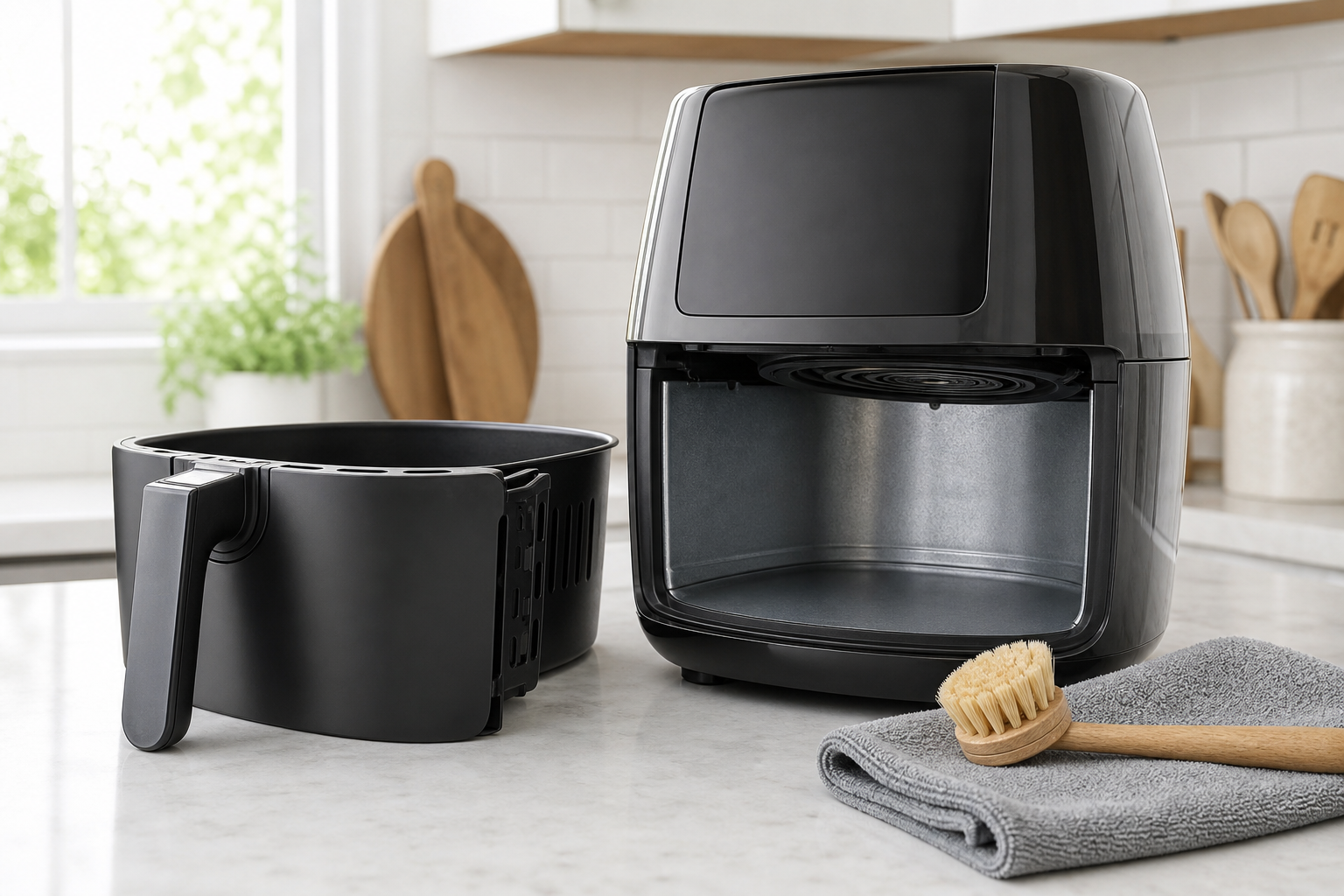
If you use the fryer often and have safe counter space, leaving it in place prevents risky lifting. Unplug it when recommended, keep vents clean, and avoid stacking items on top. If it must be stored, wait until it is cool, clean, and dry.
Use both hands to move it, supporting the body rather than carrying it by the basket handle. Store the cord loosely without pinching it. A lower cabinet or sturdy pantry shelf can work if you can lift the appliance comfortably and the shelf supports its weight.
Frequently Asked Questions
Can an air fryer sit under kitchen cabinets?
Only if the manufacturer’s required clearance is maintained and heat or steam does not collect. Many users need to pull the fryer forward into open space during operation.
Can I put an air fryer on a wooden countertop?
It depends on the counter finish and appliance instructions. Use the required clearance and an approved heat-resistant mat if permitted; never use towels or materials that block vents.
Can an air fryer be plugged into an extension cord?
High-wattage appliances are generally best connected directly to a suitable grounded wall outlet as directed by the manual. An unsuitable extension cord can overheat or create a trip hazard.
Can I put an air fryer next to the sink?
Choose a dry location farther from splashes. Water near a powered appliance and hot basket creates unnecessary electrical and burn risks.
Final Thoughts
Place an air fryer on a stable, level, heat-resistant counter with its vents open, its exhaust aimed away from surfaces, and enough room to remove the hot basket safely. Keep it away from water, active burners, combustible items, and counter edges.
Because designs differ, the owner’s manual is the final authority on clearance, electrical connection, and permitted surfaces. Treat storage and operation as separate decisions, and move the fryer into a fully safe position before switching it on.
 ✓
✓