Why Is My Air Fryer Smoking?
Find out why an air fryer smokes and how to handle grease, food debris, temperature, overcrowding, and cleaning safely.
An air fryer may smoke because grease or food debris has reached the hot drip area or heating zone, the temperature is too high for a fatty food, the basket is overcrowded, or residue from earlier cooking is burning. A small amount of steam from moist food is normal, but persistent gray or blue smoke is a signal to stop and check the appliance.
Turn the air fryer off and unplug it if smoke is heavy, smells electrical, or is accompanied by sparks, flames, or abnormal noise. Let it cool completely before inspecting it. Do not pour water into the hot basket or chamber, which can cause splattering and damage the appliance.
Once the unit is cool, identify whether the smoke came from food fat, a dirty basket, loose paper, or an appliance issue. The safest solution is usually cleaning and adjusting the cooking setup, not covering vents or trying to mask the smell.
Tell Steam From Smoke
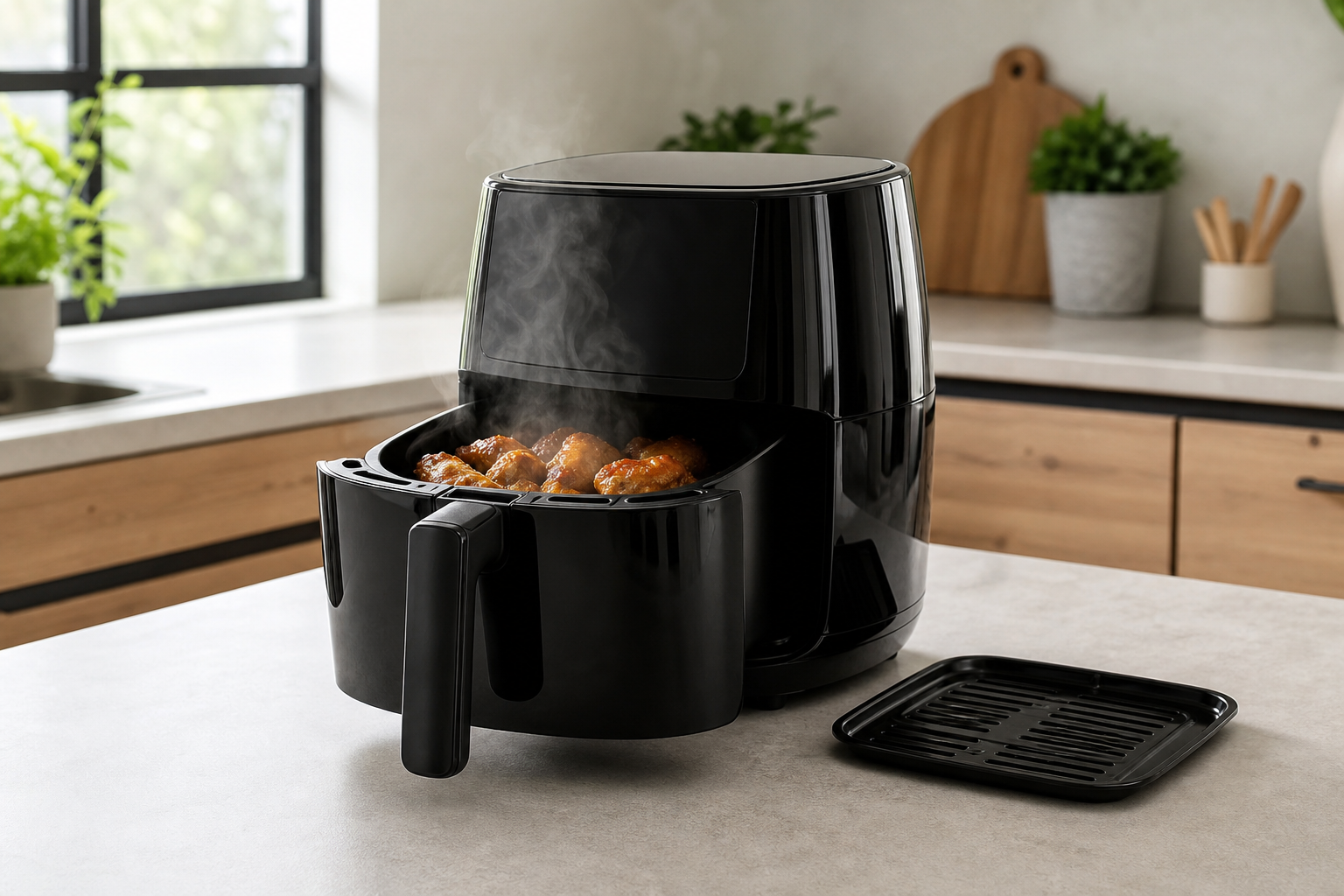
Steam is usually light, white, and associated with moist food such as vegetables, frozen items, or reheated meals. It disperses quickly and does not have a burnt smell. Smoke is often grayer, more persistent, and may smell like hot oil, charred food, or electrical material.
If you cannot tell which it is, pause cooking and observe from a safe distance. Ventilate the kitchen by using the hood or opening a window if appropriate. Do not leave the appliance unattended while it is producing visible emissions.
Clean Grease and Crumbs From the Basket
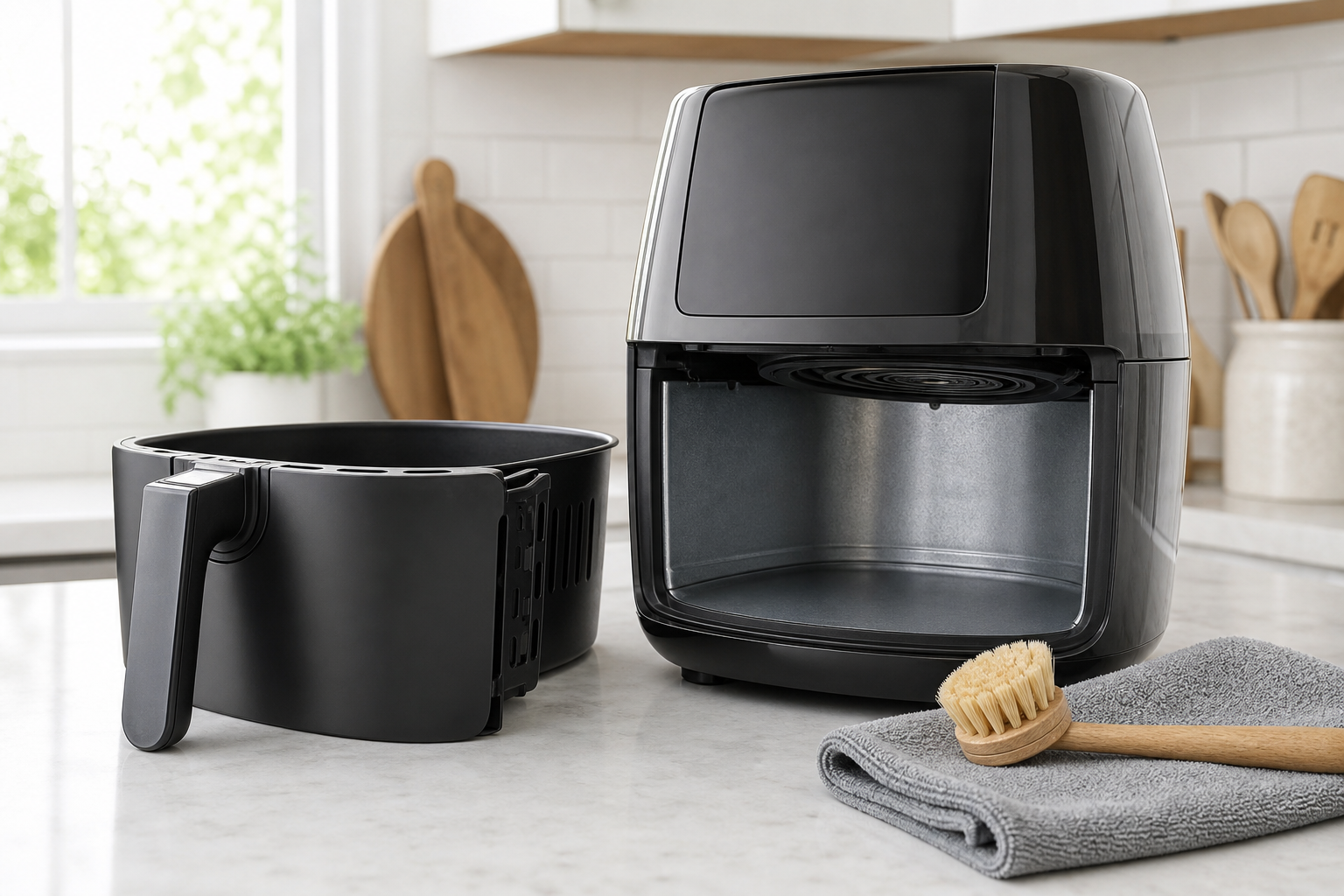
Old grease in the basket, crisper plate, drip area, or upper chamber can smoke long before new food is done. Remove user-serviceable parts after cooling and wash them with a nonabrasive method approved by the manual. Clean visible residue from the chamber with minimal moisture.
Pay attention to fatty splatter near the heating area. Do not use oven cleaner, metal scrapers, or direct sprays inside the appliance. A soft brush and well-wrung cloth are safer for accessible surfaces.
Manage Fatty Foods Carefully
Bacon, burgers, wings, sausages, and heavily marbled foods release fat quickly. Follow the manufacturer’s advice for these foods and empty accumulated grease between batches after the appliance cools enough to handle safely. Some models permit a small amount of water in a lower pan for certain fatty foods; use that method only if your manual specifically says so.
Do not line the basket in a way that blocks airflow or drainage. Trapped grease can overheat, and loose liners can lift toward the element.
Use the Right Temperature and Portion Size
A high temperature can burn sugars, oils, spices, or loose crumbs. Lower the temperature slightly or shorten the cooking time when food browns too quickly. Shake or turn food as recommended so one area does not char while another remains undercooked.
Overcrowding reduces airflow and can cause drips or crumbs to collect. Cook in smaller batches when necessary. Better airflow improves crisping and makes smoke less likely.
Check Parchment, Foil, and Accessories
Use liners and accessories only when they are safe for your model and cooking method. Paper must be weighed down by food and should never be placed during preheating if it can blow into the element. Foil can also block vents or trap grease when used incorrectly.
Never cover the outside vents, cooking chamber ceiling, or basket openings. An air fryer depends on airflow for both cooking and cooling. If you are unsure about an accessory, use the basket without it.
Inspect the Heating Area After Cooling
With the appliance unplugged and completely cool, look for visible debris or grease near the heating element and fan guard. Clean only user-accessible areas following the manual. Do not remove screws, bend the coil, or reach into fan components.
If residue is thick, repeat gentle cleaning sessions rather than applying harsh products. Allow every surface to dry fully before use. Persistent smoke after a thorough approved cleaning needs further attention.
Keep the Appliance Properly Placed
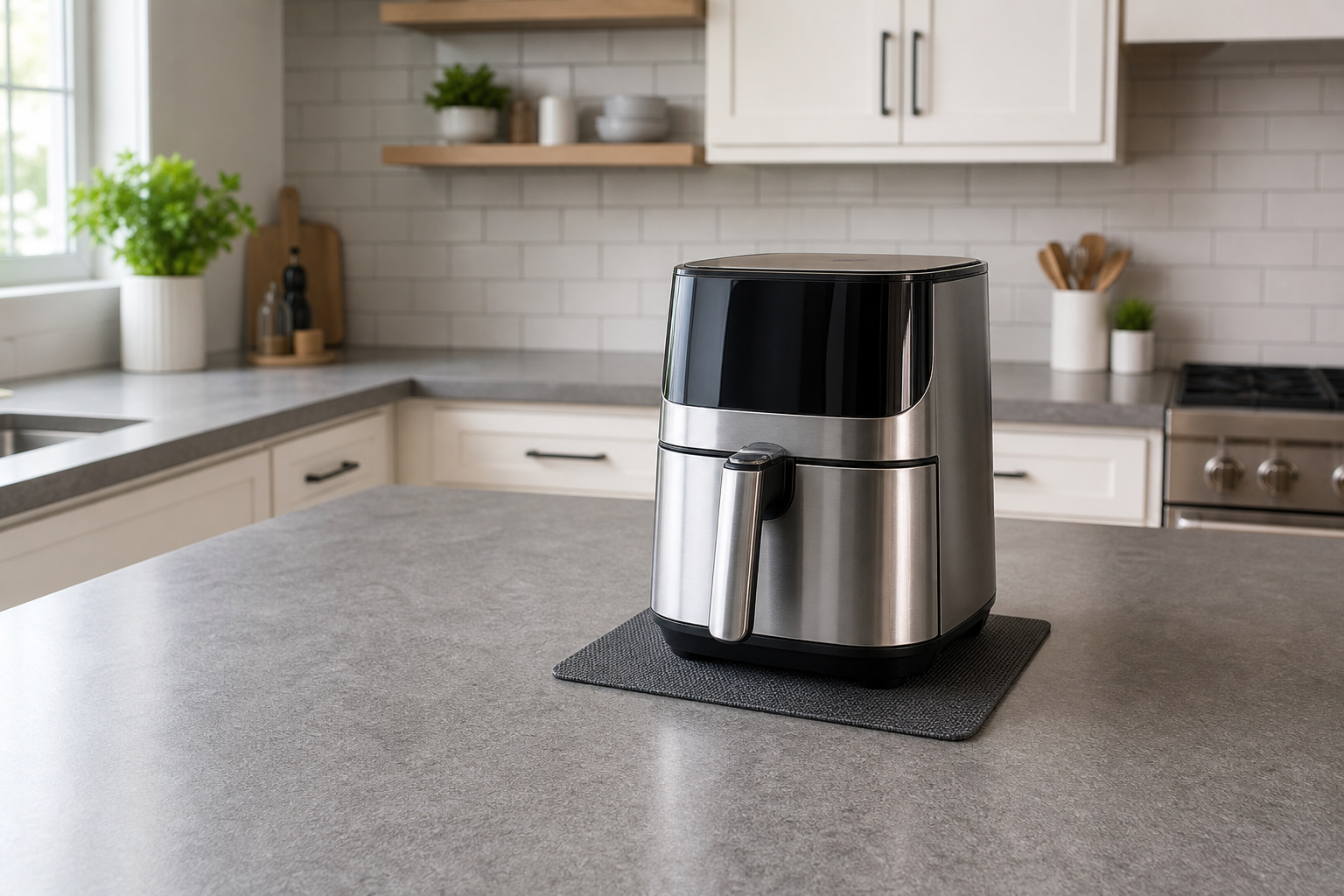
Use the air fryer on a stable heat-resistant counter with the required clearance around its exhaust and intake. Poor ventilation may trap steam and heat, but moving the unit outdoors, next to water, or onto an unstable surface creates other risks.
Keep the cord away from hot surfaces and do not use a damaged outlet, loose plug, or unsuitable extension cord. Electrical problems can produce a sharp or burning-plastic odor rather than a food smell.
When to Stop Using the Air Fryer
Stop using the appliance immediately if smoke is heavy, electrical-smelling, or paired with sparks, flames, repeated error messages, a warped basket, exposed wire, or a damaged cord. Unplug it without touching hot areas and keep it on a noncombustible surface while it cools.
Do not attempt internal repair. Contact the manufacturer, retailer, or a qualified repair provider with the model, serial number, cooking conditions, and description of the smoke. Replace a unit that has visible electrical damage.
Prevent Smoke on Future Cooks
Clean the basket after each use and inspect the chamber after especially greasy meals. Use the recommended amount of oil, trim excess fat where appropriate, and remove loose crumbs before the next batch. A short pre-cook check prevents many smoke events.
Keep cooking notes for foods that repeatedly smoke. A lower temperature, shorter time, different rack position, or smaller batch can make a meaningful difference without sacrificing results.
Frequently Asked Questions
Can I put water in the air fryer to stop smoke?
Only if the manufacturer specifically permits a small amount for a particular model and food type. Never pour water into a hot appliance or onto electrical components.
Is white smoke from an air fryer normal?
Light white steam from moist food can be normal. Persistent smoke with a burnt or electrical odor is not and should be investigated after cooling.
Why does my air fryer smoke even when empty?
Old grease or crumbs near the heating area may be burning. If approved cleaning does not fix it, stop using the unit and contact support.
Can parchment paper cause air fryer smoke?
Yes. Loose or oversized paper can block airflow or lift toward the heating element. Use only approved liners, secured by food as directed.
Final Thoughts
Air-fryer smoke usually traces back to grease, debris, heat, crowded food, or an unsuitable liner. Pause, unplug when needed, let the appliance cool, and clean it gently according to its manual before trying again.
Treat electrical odors, sparks, flames, or persistent smoke as a reason to stop using the appliance. Safe placement, proper airflow, and regular cleaning prevent the most common causes.
 ✓
✓