Why Does My Wi-Fi Signal Drop in Certain Rooms? Causes and Fixes
Wi-Fi can drop in certain rooms when walls, distance, interference, or router placement weaken the connection. Learn how to identify and fix it.
Wi-Fi usually drops in certain rooms because the signal is being weakened or blocked before it reaches them. Distance from the router, dense building materials, competing wireless signals, and poor router placement are the most common reasons. In some homes, the problem is not signal strength at all: it may be a crowded network, an aging router, or a device that is connecting on the less suitable Wi-Fi band.
The fastest path to a fix is to identify whether the trouble is limited to one room, one device, or the whole home. Then make changes in order, starting with router placement and simple interference checks before considering additional equipment.
Why Wi-Fi is weak in some rooms
Distance and physical barriers
Wi-Fi radio signals lose strength as they travel. A bedroom at the opposite end of the home, a finished basement, garage, patio, or upstairs office may simply be beyond the router’s reliable range.
Walls and floors matter as much as distance. Drywall generally causes less trouble than brick, concrete, plaster with metal lath, stone, tile, mirrors, metal ductwork, fireplaces, and large appliances. Water also absorbs Wi-Fi energy, so a bathroom, laundry room, or space near an aquarium can be unexpectedly difficult to cover.
The router is in the wrong spot
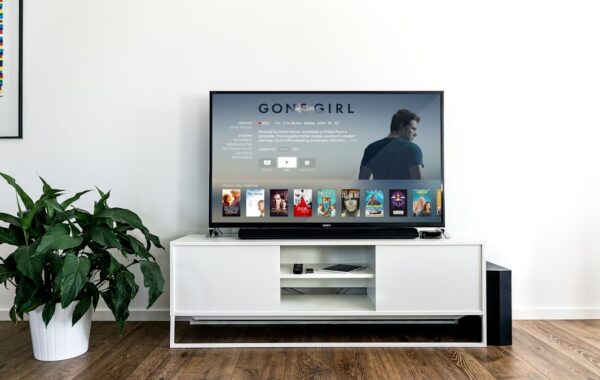
A router placed in a cabinet, media console, closet, basement corner, or behind a television starts with a disadvantage. Those locations put furniture, wiring, electronics, and walls directly in the signal’s path. Router placement near one exterior wall can also send a significant portion of coverage outside rather than toward the rooms where it is needed.
Interference and crowded channels
Nearby Wi-Fi networks can compete for the same radio channels, especially in apartments, townhomes, and dense neighborhoods. Other household devices may also interfere, including some baby monitors, wireless cameras, Bluetooth devices, cordless phones, and microwave ovens. Interference may explain a connection that works most of the time but slows down or drops at predictable times.
2.4 GHz and 5 GHz behave differently
Most modern routers use more than one Wi-Fi band. The 2.4 GHz band generally reaches farther and passes through obstacles better, but it is often more crowded and can be slower. The 5 GHz band can provide more capacity and speed at shorter range, but it weakens more quickly through walls and floors. Some newer routers also offer 6 GHz, which can be useful close to the router but is typically even less forgiving of barriers.
A device in a distant room may repeatedly lose a 5 GHz connection even though a stable 2.4 GHz connection would be more practical there.
A device or network problem
If only one phone, laptop, streaming device, or smart-home device disconnects, the router may not be the main problem. The device could need an operating-system update, a network settings reset, or a restart. A busy network can also make a weak-signal room seem worse: video calls, game downloads, cloud backups, and multiple streams can use much of the available internet connection.
How to troubleshoot the problem step by step
- Check the pattern. Stand in the affected room with a phone or laptop and compare it with a room near the router. Note whether the issue is weak signal, slow performance, or a complete disconnect. Test at different times of day if the problem comes and goes.
- Restart the router and the affected device. This will not solve every coverage issue, but it can clear a temporary connection problem. If your internet provider uses separate modem and router equipment, restart them according to the provider’s recommended sequence.
- Move the router temporarily. Put it in a more open, central, elevated location if possible. Avoid enclosing it in furniture or placing it directly on the floor. Retest the weak room before making a permanent change.
- Try the other Wi-Fi band. If your network shows separate names for 2.4 GHz and 5 GHz, connect the device in the weak room to 2.4 GHz and compare reliability. If the router combines bands under one name, its settings or app may offer a way to review band steering or create separate network names.
- Reduce nearby interference. Keep the router away from microwaves, large metal objects, dense wiring bundles, and other radio equipment when practical. See whether disconnects coincide with using a microwave or another appliance.
- Update software and firmware. Install available updates for the router and the affected device. Router updates can improve stability and address known issues.
- Check Wi-Fi channel settings. In crowded areas, changing the channel can help. Many routers can select a channel automatically; if that is not working well, the router’s administration settings may allow a manual selection. Make one change at a time and retest.
Start with better router placement
For many households, moving the router is the most effective no-cost improvement. Aim for a central location relative to the rooms that need service most, rather than placing it where the internet line first enters the home. If moving it is not straightforward, a longer approved cable connection or a different installation location may be possible.
- Place the router in an open area with airflow.
- Raise it onto a shelf or table rather than leaving it on the floor.
- Keep it away from thick masonry, metal cabinets, and large televisions when possible.
- Position external antennas according to the router maker’s guidance; mixed vertical and horizontal orientation can help serve devices held in different positions.
- Do not hide the router just because its lights or cables are unattractive if that location compromises coverage.
When a placement change is not enough
A large, long, multi-story, or unusually solid home may need more than one Wi-Fi access point. The best approach depends on the layout and whether a wired connection can reach the weak area.
A mesh Wi-Fi system uses multiple coordinated nodes to cover separate areas of a home. It is often useful when the router cannot be placed centrally or when coverage must reach multiple floors. For best results, place an additional node where it still receives a good connection from the main router—not in the dead zone itself.
A wired access point can be a strong option for a detached office, basement, or distant room because the network connection travels by cable before Wi-Fi is broadcast locally. Where suitable existing wiring is available, other networking methods may be worth discussing with an installer or internet provider. The right option depends on the building and local electrical conditions.
Common mistakes that make weak Wi-Fi worse
- Putting an extender in the dead zone. It needs a usable signal to repeat. Place it between the router and the weak area, then verify performance.
- Assuming more internet speed fixes poor coverage. A faster internet plan does not make a weak Wi-Fi signal travel farther through walls.
- Changing several settings at once. Make a single change, test it, and keep notes. Otherwise, you will not know what helped.
- Ignoring a one-device issue. If every other device works in the same room, troubleshoot that device before replacing network equipment.
- Leaving old equipment unmaintained. A router that no longer receives security or firmware updates may be less reliable and harder to secure.
Prevent Wi-Fi dropouts over time
Recheck coverage after rearranging furniture, adding large appliances, or converting a room into an office or entertainment space. Keep router firmware current, restart equipment when a temporary issue appears, and review which devices are connected to your network. Use a strong, unique Wi-Fi password and current network security settings to prevent unauthorized devices from consuming bandwidth.
For renters, avoid drilling or altering wiring without permission. You can still improve coverage substantially by relocating equipment within the unit, choosing an open spot, and using removable cable-management methods where allowed.
When to contact your internet provider or get help
Contact your internet provider if the connection fails on wired devices as well as Wi-Fi devices, if outages affect the entire home, or if the modem reports an ongoing service issue. That points more toward the incoming internet service than room-by-room Wi-Fi coverage.
Consider qualified local help when the home has difficult construction, equipment must be relocated with new wiring, or you need dependable connectivity in a detached structure. Explain which rooms fail, when the issue happens, and what troubleshooting steps you have already tried.
FAQ
Why does Wi-Fi work in one room but not the next?
The rooms may be separated by a dense wall, plumbing, metal ductwork, or another obstacle that blocks radio signals. Router position and the Wi-Fi band in use can also make a major difference.
Does closing a door affect Wi-Fi?
It can, especially if the door is solid wood, metal, or near other dense materials. Usually the effect is modest, but it may be enough to disrupt an already weak connection.
Should I use 2.4 GHz or 5 GHz in a far room?
Try 2.4 GHz first if reliability is the priority and the room is far from the router. Try 5 GHz when the device is closer and you need more speed. Actual results vary with the home’s layout and nearby networks.
The bottom line
Wi-Fi dropouts in certain rooms are usually a coverage problem caused by distance, barriers, placement, or interference. Start by moving the router into an open, central location and testing the appropriate Wi-Fi band. If a known weak area still needs reliable service, extending the network with a properly placed additional access point or mesh node may be the next practical step.
 ✓
✓