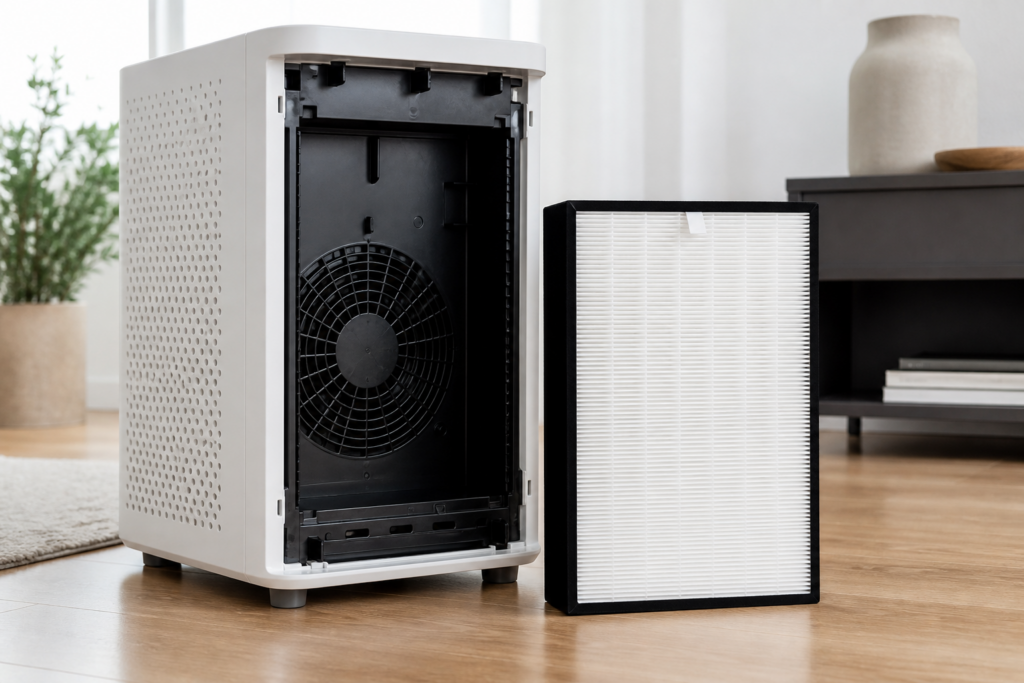
Most air purifier filters need replacement somewhere between several months and about a year, but there is no universal schedule. The correct interval depends on the filter design, operating hours, fan speed, indoor pollution, pets, smoke, renovation dust, and the manufacturer’s instructions.
A filter should be changed when it reaches the recommended service interval or when reduced airflow, persistent odor, visible loading, or performance changes indicate that it can no longer work efficiently. A filter reminder is helpful, but many reminders are simple timers rather than sensors that directly measure the condition of the media.
Replacing filters too late can restrict airflow and reduce cleaning performance. Replacing them much earlier than necessary wastes money and materials. A better approach is to combine the manual’s guidance with regular inspection and knowledge of the conditions in your home.
Typical Replacement Intervals by Filter Type
Manufacturers commonly specify different schedules for pre-filters, pleated particle filters, and activated-carbon filters. A washable mesh pre-filter may need cleaning every few weeks, while a disposable main filter may last many months. Thin carbon sheets can lose odor-control effectiveness sooner than the main particle media.
Treat these intervals as general planning ranges, not guarantees. A purifier running continuously beside a shedding pet or during wildfire smoke may load faster than the same model used occasionally in a clean guest room. Always follow the instructions supplied with the exact filter and purifier.
- Pre-filter: inspect frequently and clean or replace only as directed.
- Main particle filter: commonly replaced after several months of regular use.
- Activated-carbon filter: replace when odor control declines or at the specified interval.
- Combined filter cartridge: replace the entire cartridge according to the model’s schedule.
Signs the Filter May Need Replacement
Reduced airflow is one of the most useful warning signs. If the outlet feels weaker at the same fan setting and the intake is not blocked, accumulated material in the filter may be restricting circulation. Increased fan noise can occur as the machine works against that resistance.
Other clues include a dirty or discolored surface, odors that return quickly, and particle readings that improve more slowly than before. Appearance is not conclusive, however. Fine material can load deep inside the pleats, while harmless discoloration can make a filter look worse than it performs.
How Pets Affect Filter Life
Pets can shorten filter life by adding dander, fine debris, and hair to the room. Much of the visible hair should be stopped by the pre-filter before it reaches the main media. Cleaning the pre-filter at the approved interval helps preserve airflow and may extend the useful life of the more expensive filter behind it.
Do not vacuum the main pleated filter unless the manufacturer allows it. A vacuum nozzle can damage delicate fibers or pull particles deeper into the material. Grooming pets, washing bedding, and vacuuming floors reduce the amount of debris the purifier must capture.
Smoke, Cooking, and Renovation Dust
Wildfire smoke, tobacco smoke, candles, frying, and renovation projects can load filters rapidly. Fine particles may not create a thick layer that is easy to see, but they still occupy the filter’s available area. Odor-control media can also become saturated during repeated smoke or cooking events.
Use source control and ventilation where appropriate instead of relying on the purifier alone. During sanding, demolition, or painting, protect the living area and follow safe work practices. A portable purifier is not a substitute for construction dust collection or ventilation required for fumes.
Does Running the Purifier All Day Wear Out the Filter Faster?
Longer operating time moves more air through the filter, so it can capture more material. That may lead to earlier replacement than occasional use, but it also means the purifier is doing more useful work. Turning the machine off simply to preserve the filter reduces the amount of air being cleaned.
A practical strategy is to run the purifier continuously at a comfortable speed and increase the fan during high-particle events. Automatic modes can reduce airflow when a compatible sensor reports cleaner conditions, although the sensor may not respond to every pollutant.
Can You Wash or Vacuum an Air Purifier Filter?
Only wash a component labeled washable by the manufacturer. Many true pleated particle filters are not washable. Water can disturb the fibers, damage adhesives, and leave trapped moisture that causes odor or microbial growth. A filter that looks intact after washing may no longer perform as designed.
Some permanent or mesh pre-filters can be rinsed or vacuumed. Let a washable component dry completely before reinstalling it. Never apply household cleaner, fragrance, or oil to a filter unless the instructions specifically permit that treatment.
How to Check the Filter Safely
Turn the purifier off and unplug it before opening the filter compartment. Move the unit away from walls if needed, release the cover carefully, and note the direction of the old filter. Avoid shaking a loaded filter indoors because captured dust can return to the room.
Place the old filter directly into a bag if it is heavily loaded. Wipe the empty compartment and intake grille with a dry or slightly damp cloth as allowed, keeping moisture away from the motor and electronics. Install the replacement in the correct direction and remove every piece of protective plastic.
Resetting the Filter Indicator
A filter light usually does not turn off automatically when a new filter is installed. Many models require holding a specific button for several seconds. Consult the manual because the reset combination varies, and do not reset the timer without actually servicing the filter.
If the light returns immediately, confirm that the cover is fully closed and that the replacement cartridge is seated correctly. Some purifiers use a sensor or identification mechanism that may not recognize an incompatible filter.
How to Make Filters Last Without Sacrificing Air Quality
Keep windows closed during heavy pollen or smoke, use exhaust ventilation while cooking, and remove shoes at the entrance. Vacuuming with appropriate filtration and damp dusting can capture settled material before activity sends it back into the air.
Maintain the pre-filter, give the purifier adequate clearance, and use the correct replacement cartridge. Buying an unverified filter that fits physically but changes airflow or sealing may reduce performance. Saving a small amount on a filter is not useful if air can bypass the media.
Frequently Asked Questions
What happens if I do not change the air purifier filter?
Airflow and particle removal can decline as the filter loads. The fan may become noisier, odors may return, and the purifier may take longer to clean the room. Follow the service schedule rather than waiting for complete blockage.
Can I change the filter before the warning light turns on?
Yes. The light may be a timer and cannot account for smoke, pets, or unusual dust. Replace the filter sooner when inspection and performance indicate that it is heavily loaded.
Why does my new filter smell?
A mild material odor may occur briefly with some new filters, but strong chemical, burning, or persistent odors are not normal. Turn the unit off, confirm that packaging was removed, and contact the manufacturer if the odor continues.
Should I buy several replacement filters at once?
Keeping one sealed replacement is convenient. Avoid storing many for years because packaging can be damaged and model designs can change. Store filters dry, clean, and sealed.
Can a dirty filter make indoor air worse?
A loaded filter mainly reduces airflow and performance. Moisture exposure, incorrect washing, or severe contamination can also create odor concerns, which is why proper maintenance and dry storage matter.
Final Thoughts
There is no single replacement interval for every air purifier. Use the manufacturer’s schedule as the baseline, then adjust for operating time, pets, smoke, dust, airflow, and visible loading. Check the pre-filter regularly and pay attention to performance changes.
Do not wash disposable particle filters or reset reminders without servicing the unit. Correct replacement, a clean intake, and sensible source control help the purifier move air efficiently without wasting usable filters.
Leave a Reply