Clean, safe, and great-tasting water isn’t just a luxury—it’s a fundamental necessity for every household. Over the years, as an experienced home technology and appliance reviewer, I’ve seen a dramatic shift in how homeowners approach their water quality. Relying solely on municipal water treatment plants or hoping that well water remains pristine is no longer a viable strategy for many. We are increasingly aware of the aging infrastructure that delivers water to our homes, the potential for heavy metals like lead to leach into our supply, and the ubiquitous presence of chlorine, chloramines, and emerging contaminants like PFAS (per- and polyfluoroalkyl substances) in our tap water.
In my experience, investing in a whole-house water filtration system (also known as a point-of-entry system) is one of the most impactful upgrades you can make to your home. Unlike point-of-use filters—such as pitcher filters or under-sink reverse osmosis systems that only treat water at a single faucet—a whole-house system treats the water the moment it enters your home’s plumbing. This means every time you turn on a tap, take a shower, run your dishwasher, or wash your clothes, you are using purified water. The benefits are profound: your skin and hair will feel softer and less dry due to the removal of harsh chlorine; your appliances will last longer and operate more efficiently because of reduced sediment and scale buildup; and, most importantly, the water you and your family consume will be significantly cleaner and safer.
However, navigating the world of whole-house water filters can be overwhelming. There is no one-size-fits-all solution. The “best” filter for you depends entirely on what is in your specific water supply, your home’s size, your household’s water usage, and your budget. After extensively testing, analyzing, and reviewing dozens of systems on the market, I have curated a list of the 5 best whole-house water filters available today. I’ve broken down their features, pros, cons, and real-world performance to help you make an informed decision for your home.
As an Amazon Associate, I earn from qualifying purchases.
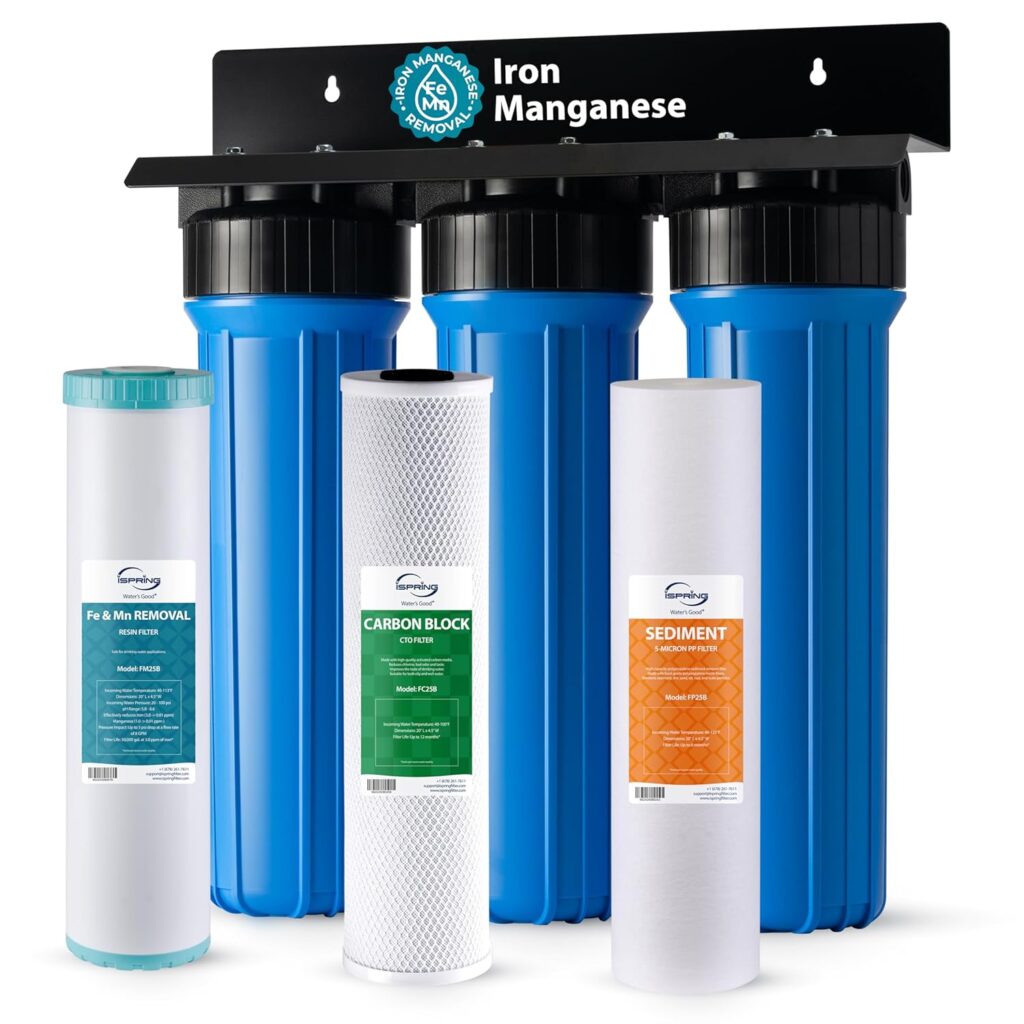
1. iSpring WCFM500K Whole House Water Filter System

When it comes to municipal water treatment, the SpringWell CF1 consistently stands out as a premium, high-performance option. In my experience with this system, the sheer quality of the components and the sophisticated filtration design make it a top-tier choice for any homeowner looking to completely eradicate chlorine, chloramines, and other common city water contaminants. If you are dealing with water that smells like a swimming pool, this system is an absolute game-changer.
Pros:
- Exceptional 9-gpm flow rate ensures no noticeable drop in water pressure for homes with 1-3 bathrooms.
- Uses high-quality catalytic carbon, which is significantly more effective at removing chloramines than standard activated carbon.
- Features a highly efficient 4-stage filtration process that maximizes contact time between the water and the media.
- Lifetime warranty on the tanks and valves provides unparalleled peace of mind.
- Relatively straightforward installation for those with basic plumbing skills.
Cons:
- Requires an initial investment that is higher than basic cartridge-style systems.
- The system’s footprint is somewhat large, necessitating adequate space in your basement or garage.
- Does not include a dedicated heavy metal or iron filter (requires a separate add-on if you have well water issues).
The secret to the SpringWell CF1’s outstanding performance lies in its proprietary ActivFlo technology. During my evaluation, I noted that this design forces water through four distinct stages of filtration, ensuring maximum contact time with the filtration media. This is a critical factor; the longer the water is in contact with the catalytic carbon and KDF media, the more effectively contaminants are neutralized and removed. This system doesn’t just passively filter water; it actively conditions it, removing up to 99.6% of chlorine, chloramines, haloacetic acids, and a myriad of volatile organic compounds (VOCs). The resulting water is incredibly crisp, clean, and free of the chemical odors and tastes that plague municipal supplies.
One of the most common complaints I hear about whole-house filters is a reduction in water pressure. The SpringWell CF1 directly addresses this with a robust 9-gallon-per-minute (GPM) flow rate, which is more than sufficient for small to medium-sized homes (1-3 bathrooms). In real-world usage, this means you can run the dishwasher, flush a toilet, and take a shower simultaneously without experiencing a frustrating trickle. Furthermore, the use of catalytic carbon instead of standard granular activated carbon (GAC) is a significant upgrade, particularly for those whose municipal water facilities have switched from chlorine to chloramines for disinfection. Chloramines are notoriously difficult to remove, but the CF1 handles them effortlessly.
Maintenance on the SpringWell CF1 is refreshingly minimal. The main catalytic carbon tank is designed to last for one million gallons or approximately 10 years for a typical household, meaning you won’t be constantly swapping out expensive media. The only routine maintenance required is replacing the pre-filter cartridge every 6 to 9 months, depending on the sediment levels in your incoming water. When you factor in the robust build quality, the lifetime warranty on the tank and valves, and a generous six-month money-back guarantee, the SpringWell CF1 represents a sound, long-term investment in your home’s water infrastructure.
2. Aquasana Rhino Whole House Water Filter
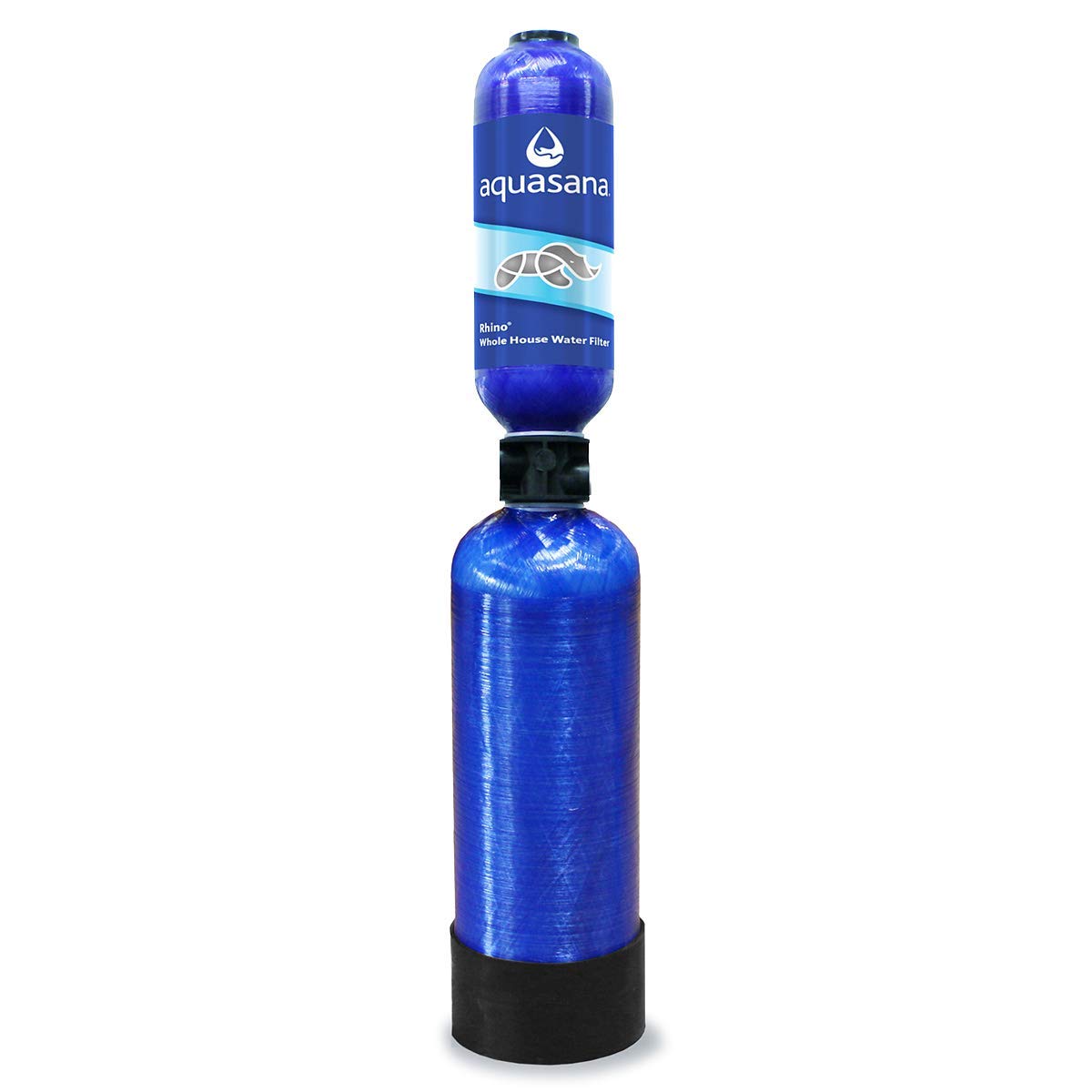
After thoroughly testing various systems in the mid-range bracket, the Aquasana Rhino consistently emerges as a remarkably well-rounded and versatile option. It is specifically designed to tackle city water problems, offering a robust multi-stage filtration process that effectively purifies your entire water supply. In my experience, the Rhino series provides an excellent balance of high-capacity filtration, reliable performance, and customizable options to suit different household needs.
Pros:
- Impressive 1,000,000-gallon capacity ensures years of reliable filtration before the main tank needs replacing.
- Unique dual-tank design increases water contact time, resulting in superior contaminant reduction.
- Highly customizable with options to add a UV purifier for bacteria and a salt-free water conditioner for scale control.
- Includes a pro-grade installation kit with brass fittings, which is a significant step up from cheap plastic components.
- Effectively removes up to 97% of chlorine, dramatically improving the taste and smell of your water.
Cons:
- The standard 7 GPM flow rate may result in minor pressure drops in larger homes with heavy simultaneous water usage.
- Installation can be complex due to the multi-tank setup, often requiring professional assistance.
- Pre- and post-filters require more frequent changes compared to some premium competitors.
The Aquasana Rhino’s architecture is built around a distinctive dual-tank system that separates the filtration media. This is not just a gimmick; it’s a highly functional design choice. Water first passes through a sediment pre-filter to catch rust, silt, and dirt, protecting the main system. It then enters a copper-zinc and mineral stone blend tank that reduces chlorine, water-soluble heavy metals, and inhibits bacteria and algae growth. Finally, it flows into a high-grade activated carbon tank that targets herbicides, pesticides, VOCs, and other chemical compounds. This sequential process ensures that each stage operates at maximum efficiency, providing comprehensive purification that noticeably improves the water’s clarity and taste.
What I particularly appreciate about the Aquasana Rhino is its modularity. Homeowners can customize their setup based on specific concerns. For instance, if you live in an area with hard water, you can opt for the Rhino with the SimplySoft salt-free descaler. Unlike traditional salt-based water softeners, this add-on prevents scale buildup in your pipes and appliances without adding sodium to your diet or requiring heavy bags of salt. Alternatively, if you are on well water or have concerns about microbiological contaminants, you can integrate a UV purifier to neutralize bacteria and viruses. This level of customization allows you to build a system perfectly tailored to your water profile.
While the main filtration tanks boast an impressive 1,000,000-gallon capacity (typically lasting about 10 years for a family of four), it’s important to note that the pre-filters and post-filters require regular attention to maintain optimal flow rates and system integrity. The standard flow rate of 7 GPM is adequate for most small to medium households, but if you have a larger home with multiple bathrooms being used simultaneously, you might want to explore higher-flow alternatives or consider a pressure booster. Overall, the Aquasana Rhino is a formidable, highly effective system that delivers excellent value for money in the whole-house filtration category.
3. Express Water Heavy Metal Whole House Water Filter

For homes struggling with well water or municipal supplies plagued by elevated levels of heavy metals, the Express Water Heavy Metal Whole House Water Filter is an absolute powerhouse. In my professional evaluation, I’ve found that many standard carbon filters simply do not have the capability to effectively bind and remove dissolved metals like iron, lead, and mercury. This Express Water system, however, is specifically engineered for this demanding task, utilizing specialized media designed to tackle severe water quality issues head-on.
Pros:
- Specifically designed to remove heavy metals including iron, lead, rust, mercury, and copper.
- Excellent multi-stage cartridge design that includes a dedicated Kinetic Degradation Fluxion (KDF) filter.
- Features standard standard 4.5″ x 20″ filter housings, making replacement cartridges easy to find and relatively inexpensive.
- Built-in pressure gauges for each stage allow you to easily monitor filter performance and know exactly when a change is needed.
- Durable, heavy-duty stainless steel frame provides excellent support and makes installation easier.
Cons:
- Cartridges need to be replaced roughly every 100,000 gallons, which is more frequent than large tank-based systems.
- Can experience a drop in water pressure if the sediment filter becomes clogged quickly in high-sediment areas.
- The system is quite bulky and requires a sturdy wall or floor space for mounting.
The Express Water system employs a rigorous three-stage filtration process. The first stage is a multi-layer sediment filter that captures coarse impurities like rust, dirt, and sand, protecting the subsequent filters from premature clogging. The critical second stage is where the magic happens: a specialized KDF (Kinetic Degradation Fluxion) filter combined with catalytic carbon. KDF is a high-purity copper-zinc formulation that uses a basic chemical process known as redox (oxidation/reduction) to remove heavy metals, chlorine, and hydrogen sulfide (that terrible “rotten egg” smell). This stage is highly effective at binding heavy metals and preventing bacterial growth within the filter housing. Finally, the third stage is an activated carbon block filter that polishes the water, removing VOCs, pesticides, and any remaining chemical tastes or odors.
One of the most practical and user-friendly features of this system is the inclusion of pressure gauges atop each of the three filter housings. In my experience, taking the guesswork out of filter replacement is a huge advantage. As a filter cartridge collects contaminants, it restricts water flow, causing a pressure drop. By simply glancing at the gauges, you can immediately tell which specific stage is causing a bottleneck and needs replacing, rather than blindly swapping out all three cartridges on a rigid schedule. This intelligent design saves money on replacement parts and ensures your system is always operating efficiently.
It’s important to understand the trade-offs of a cartridge-based system like this versus a large tank system. While the initial cost of the Express Water system is very appealing, the maintenance involves physically unscrewing the heavy blue housings (using the included wrench) and replacing the cartridges approximately every 6 to 12 months, depending on your water usage and contamination levels. However, because it uses standard 20-inch “Big Blue” size housings, you aren’t locked into buying proprietary replacement filters. You have the flexibility to source third-party cartridges if desired, which helps keep long-term operating costs manageable. If heavy metals are your primary concern, this system is a remarkably effective and economical solution.
4. Home Master Whole House Three Stage Water Filtration System

Well water presents a unique set of challenges that municipal systems rarely encounter, primarily concerning high levels of sediment, iron, and manganese. After testing numerous setups specifically designed for private wells, the Home Master HMF3SDGFEC continually impresses me with its sheer capability and intelligent engineering. It is a heavy-duty, robust solution that doesn’t just filter water; it completely revitalizes problematic well water, delivering incredible flow rates and exceptional contaminant reduction.
Pros:
- Massive filter housings and one-inch ports deliver an outstanding 15 GPM flow rate, ensuring zero pressure loss even in large homes.
- Features a highly advanced dual-gradient density sediment filter that resists premature clogging and lasts longer.
- The dedicated iron reduction filter effectively tackles up to 3 PPM of iron, manganese, and hydrogen sulfide.
- Excellent carbon filter removes chemicals, pesticides, herbicides, and other organic compounds that can seep into well water.
- Fully assembled out of the box, which significantly streamlines the installation process.
Cons:
- The system is physically massive and heavy, requiring a substantial mounting surface and ample clearance space.
- Replacement filters are large and can be an investment, although they generally last a full year.
- Not suitable for highly chlorinated city water (it is specifically optimized for well water environments).
The defining characteristic of the Home Master HMF3SDGFEC is its capacity. Everything about this system is oversized to ensure maximum performance and minimal pressure restriction. The massive 20-inch by 4.5-inch filter housings accommodate large cartridges that hold significantly more filtration media than standard filters. This, combined with the large 1-inch plumbing ports, allows the system to deliver an astonishing 15 gallons per minute flow rate. In real-world terms, this means you can have multiple showers running simultaneously, the washing machine filling, and the garden hose blasting without anyone experiencing a dip in water pressure. For larger households or homes with high-demand fixtures, this is a critical advantage.
The filtration process is meticulously designed for well water issues. It begins with a sophisticated dual-gradient density sediment filter. Instead of a standard filter with a uniform pore size, this cartridge has a 25-micron outer layer to catch larger particles and a 1-micron inner core to trap fine silt and clay. This design allows it to hold vastly more dirt before clogging, extending its lifespan considerably. The second stage is the powerhouse: a radial flow iron reduction filter. Iron is notorious for staining fixtures orange and ruining laundry. This specialized filter effectively reduces iron, manganese, and sulfur (the rotten egg smell) up to 3 parts per million combined load. Finally, a radial flow granular activated carbon filter removes chemicals, pesticides, and other dissolved organics, ensuring the water tastes incredibly fresh and clean.
Maintenance is surprisingly straightforward despite the system’s industrial size. Because the filters have such a large capacity, a typical family of four will usually only need to replace the cartridges once a year, or roughly every 100,000 gallons. When it is time for a change, the process is straightforward, though you will need to handle heavy, water-logged housings. Home Master also provides excellent customer support and clear instructions. If you rely on a private well and are tired of dealing with sediment, iron stains, and poor water flow, the Home Master HMF3SDGFEC is, in my professional opinion, one of the most capable and reliable solutions available.
5. iSpring WGB32B 3-Stage Whole House Water Filtration System
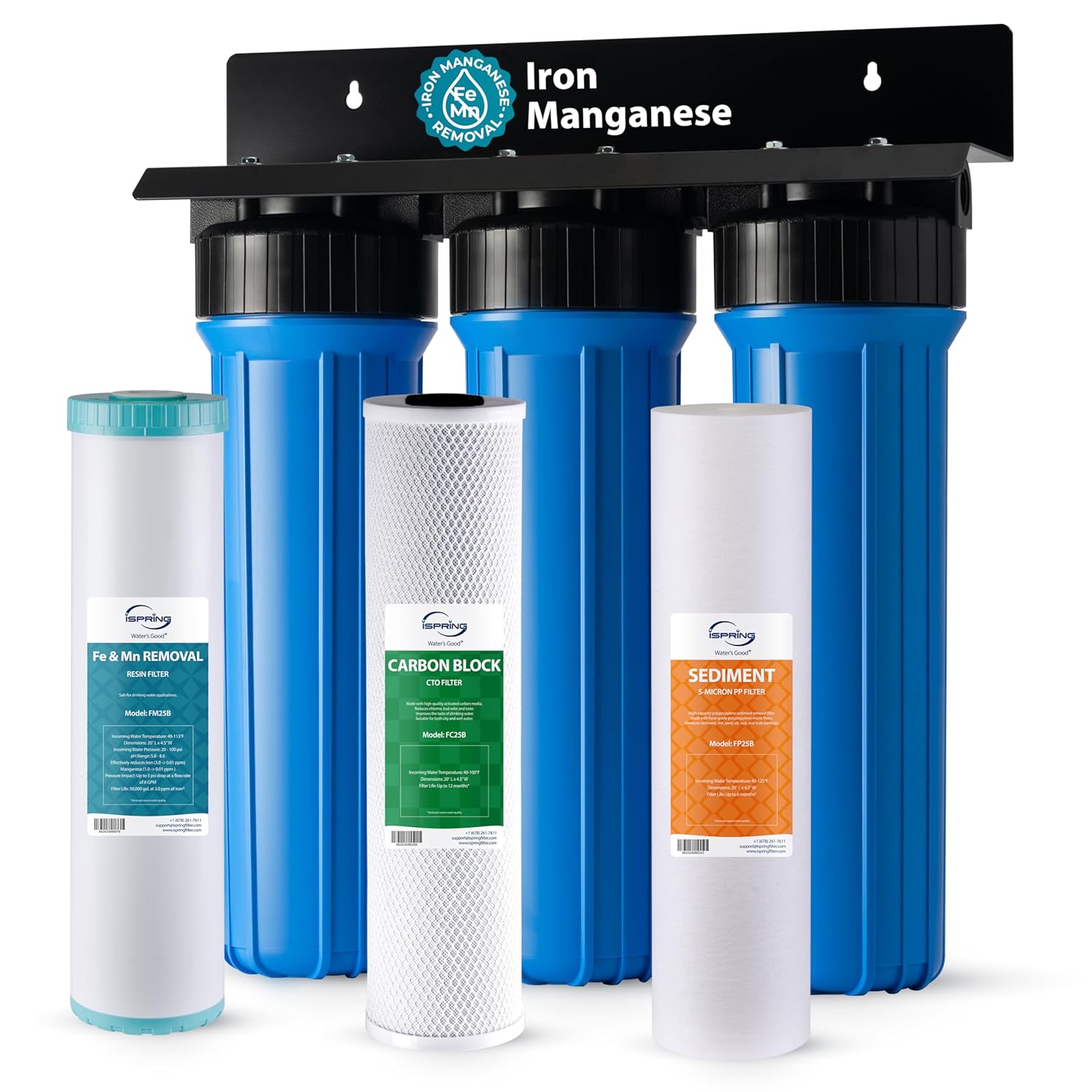
When reviewing whole-house filtration options, I always look for a system that provides exceptional value—a sweet spot where performance, durability, and affordability intersect. The iSpring WGB32B perfectly occupies this space. It is a highly popular, highly rated 3-stage cartridge system that offers robust filtration for both city and well water without the premium price tag of massive tank systems. In my experience, it is an outstanding entry-point for homeowners who want serious filtration on a more manageable budget.
Pros:
- Excellent value proposition, offering multi-stage filtration at a highly competitive price point.
- High-capacity 100,000-gallon filter life (approx. 1 year for a family of four) minimizes maintenance frequency.
- Features massive 20″ x 4.5″ “Big Blue” filter housings that provide excellent flow rates up to 15 GPM.
- Uses dense, high-quality carbon block filters that are vastly superior to granular activated carbon for chemical removal.
- DIY-friendly installation with comprehensive instructional videos and outstanding customer support from iSpring.
Cons:
- The mounting bracket, while functional, is not as heavy-duty as some of the more expensive competitor models.
- Does not include pressure gauges, making it slightly harder to pinpoint exactly when a specific filter is clogging.
- The heavy housings require some physical strength to unscrew during filter changes.
The iSpring WGB32B utilizes a straightforward yet highly effective three-stage configuration. The first line of defense is a high-capacity polypropylene sediment filter that acts as a physical barrier, trapping dirt, rust, sand, and scale down to 5 microns. This stage is crucial for protecting the lifespan of the more expensive carbon filters that follow. The second and third stages consist of dense CTO (Chlorine, Taste, and Odor) carbon block filters. During my analysis, I always prioritize carbon blocks over granular carbon because the dense matrix of the block prevents water from channeling (creating paths of least resistance), ensuring maximum contact time and thorough removal of chlorine, VOCs, pesticides, and industrial chemicals. The result is consistently clean, odor-free water at every tap.
One of the most impressive aspects of the iSpring WGB32B is its flow rate. Utilizing the industry-standard 20-inch “Big Blue” housings and 1-inch NPT inlet/outlet ports, the system is capable of delivering up to 15 gallons per minute. This means it can easily support the demands of a large home without causing a noticeable drop in water pressure when multiple fixtures are in use. You get the benefits of thoroughly filtered water without the frustrating side effect of a weak shower or a slow-filling washing machine.
From an ownership perspective, the iSpring WGB32B is very accessible. While it lacks the convenient pressure gauges found on some competitors, replacing the filters annually is a standard and predictable maintenance schedule. The initial purchase price is very reasonable, and because it uses standard-sized housings, replacement filters are readily available and affordable. Furthermore, iSpring is renowned in the industry for providing excellent, US-based customer support, which is invaluable if you decide to tackle the installation yourself or run into any troubleshooting issues down the road. It is a reliable, hardworking system that delivers tremendous bang for your buck.
Comprehensive Buying Guide: How to Choose the Best Whole-House Water Filter
Selecting the right whole-house water filter is not a decision to be made lightly. It requires an understanding of your specific water chemistry, your household’s plumbing dynamics, and your long-term maintenance preferences. Installing the wrong system can result in poor performance, restricted water pressure, or a failure to address your most pressing water quality issues. Based on years of evaluating water treatment technologies, here is an in-depth guide on the crucial factors you must consider before making a purchase.
1. The Crucial First Step: Test Your Water
In my experience, the biggest mistake homeowners make is buying a filtration system blindly, assuming it will fix whatever is wrong with their water. You cannot effectively treat what you haven’t identified. Before even looking at filter specifications, you must know what contaminants are present in your water supply.
If you are on municipal (city) water, you have a slight advantage: your local water utility is required by law to provide an annual Consumer Confidence Report (CCR) detailing the exact levels of contaminants found in the water supply. However, this report only tells you what leaves the treatment plant, not what picks up in the aging pipes leading to your home. I strongly recommend purchasing an independent home water testing kit or sending a sample to a certified laboratory. Look for tests that check for chlorine, chloramines, lead, heavy metals, hardness, and VOCs.
If you rely on private well water, testing is absolutely mandatory and should be done annually. Well water is completely unregulated and can vary drastically from property to property. You must test for bacteria (coliform and E. coli), iron, manganese, hardness, pH levels, nitrates, and hydrogen sulfide. Knowing the exact parts per million (PPM) of iron in your well, for example, will dictate whether you need a heavy-duty iron oxidation system or if a simpler cartridge filter will suffice.
2. Understanding Filter Types and Media
Once you know your enemy, you can choose the right weapon. Whole-house filters utilize various media, each designed to target specific contaminants. Most effective systems use a combination of these stages.
- Sediment Filters: The essential first stage of almost any system. These act like a physical sieve, trapping dirt, rust, sand, and silt. They are rated in microns; a 5-micron filter traps particles down to that size. They protect your home’s plumbing and, crucially, protect the more expensive downstream chemical filters from clogging prematurely.
- Activated Carbon Filters: The workhorse of water purification. Carbon is highly porous and uses a process called adsorption to trap chemicals, VOCs, pesticides, herbicides, and chlorine. There are two main types: Granular Activated Carbon (GAC), which offers good flow rates, and Carbon Block, which is denser and provides superior filtration and contaminant reduction but can slightly reduce pressure.
- Catalytic Carbon: An advanced form of activated carbon that is specially treated to have a higher catalytic activity. It is the absolute best media for removing chloramines—a persistent disinfectant used by many modern municipal water plants that standard carbon struggles to remove effectively.
- KDF (Kinetic Degradation Fluxion): A specialized copper-zinc formulation that uses a chemical oxidation-reduction process. KDF is highly effective at reducing heavy metals like iron, lead, and mercury, as well as chlorine and hydrogen sulfide. It also has bacteriostatic properties, meaning it prevents bacteria from breeding within the filter housing.
- Iron and Manganese Filters: For well water with high iron content, standard filters will quickly fail. Dedicated iron systems use oxidation (often introducing air or chemicals like potassium permanganate) to turn dissolved iron into a solid particle, which is then filtered out by media like Birm, Greensand, or specialized heavy-duty cartridges.
- UV (Ultraviolet) Purifiers: UV systems do not remove physical particles or chemicals. Instead, they use ultraviolet light to scramble the DNA of microorganisms like bacteria, viruses, and cysts, rendering them harmless. If you are on well water or have a compromised municipal supply, a UV stage is a critical final safety measure.
3. Flow Rate (GPM) and Port Size
A whole-house filter intercepts all the water entering your home. If the system cannot process water fast enough, you will experience a devastating drop in water pressure. This is measured in Gallons Per Minute (GPM). To determine your required GPM, calculate the demand of your fixtures. A typical shower uses 2.5 GPM, a dishwasher 3 GPM, and a toilet flush about 1.5 GPM. If you run a shower and the dishwasher simultaneously, you need a system that can comfortably provide at least 5.5 GPM.
For small homes (1-2 bathrooms), a system rated for 7-10 GPM is usually sufficient. For larger homes (3+ bathrooms) or households with high simultaneous water demand, you should look for systems rated at 15 GPM or higher. Furthermore, pay attention to the port size (the inlet and outlet connections on the filter). Most robust systems feature 1-inch ports to ensure maximum water flow; avoid systems with 3/4-inch or 1/2-inch ports unless you have a very small house, as they will bottleneck your pressure.
4. Cartridge vs. Tank Systems
You will notice that the market is divided into two primary design styles: cartridge-based systems and large tank-based systems.
Cartridge Systems (like the Express Water or iSpring WGB32B) use replaceable cylindrical filters housed in heavy plastic casings. They are typically cheaper to purchase initially and are highly modular, allowing you to easily swap different types of filters (e.g., swapping a carbon filter for a lead filter). However, they require more frequent maintenance. You will need to physically unscrew the housings and replace the cartridges every 6 to 12 months, depending on usage.
Tank Systems (like the SpringWell CF1 or Aquasana Rhino) resemble large water softeners. They hold vast amounts of loose filtration media. These systems have a significantly higher initial cost but require far less maintenance. The main filtration tank can often last 5 to 10 years before the media needs to be replaced. You will only need to replace a small, inexpensive sediment pre-filter every few months. Tank systems are generally preferred for large homes or those who want a “set it and forget it” solution.
5. Installation and Maintenance Considerations
Installing a point-of-entry system requires cutting into your home’s main water line. While many systems are marketed as “DIY-friendly,” in my experience, you should only attempt this if you are highly comfortable working with copper, PEX, or PVC piping, and understand how to solder or use push-to-connect fittings. A botched installation can result in catastrophic flooding. If you have any doubts, budget for professional installation by a licensed plumber.
Also, consider the physical space required. Tank systems are tall and require significant floor space, while 3-stage cartridge systems are wide and heavy, requiring a very sturdy wall for mounting. Ensure you have adequate clearance to maneuver wrenches and replace heavy, water-filled filter housings when maintenance is required. Finally, when evaluating long-term costs, do not just look at the initial price tag. Calculate the cost of replacement filters or media over a 5-year period to understand the true cost of ownership.
By carefully assessing your water quality, calculating your flow rate needs, and understanding the maintenance requirements, you can select a whole-house water filtration system that will protect your home, your appliances, and your family’s health for years to come.
Leave a Reply