How Often Should You Descale a Coffee Maker?
Find the right coffee maker descaling schedule based on water hardness, usage, warning signs, and manufacturer guidance.
Most home coffee makers should be descaled every one to three months, but the correct interval depends on water hardness, how often the machine is used, and the manufacturer’s instructions. Hard water and multiple daily brews create mineral buildup faster, while soft or properly filtered water may allow a longer interval.
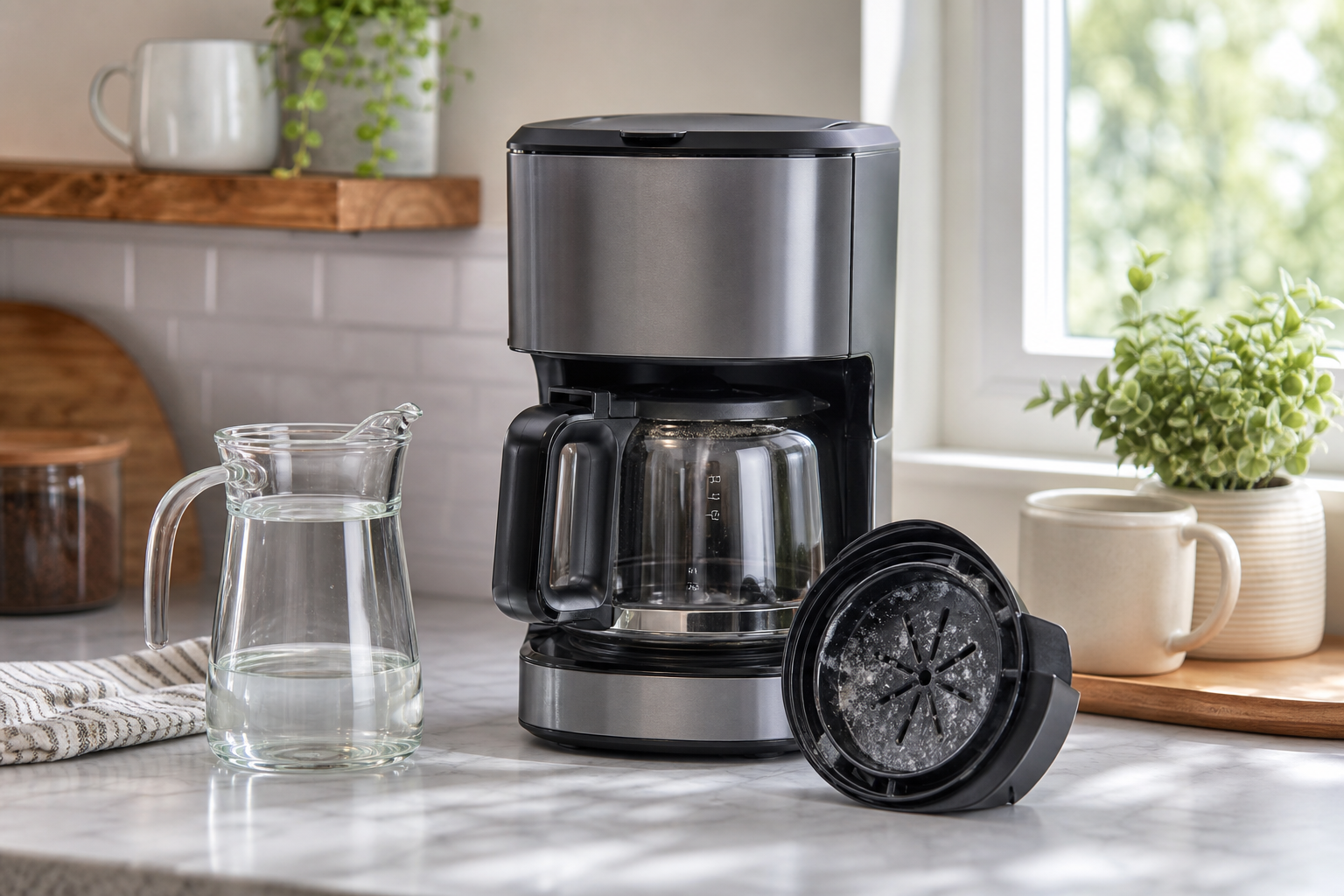
Descaling removes calcium and magnesium deposits from the internal water path. It is different from washing the carafe, brew basket, milk system, or exterior. A machine can look spotless yet heat slowly, brew less water, or make unusual noises because scale has narrowed internal passages.
Use the interval in your manual as the primary rule, then adjust based on water conditions and warning signs. The goal is preventive maintenance, not waiting until the machine struggles to finish a cycle.
A Simple Descaling Schedule
For daily use with moderately hard tap water, start with every two months. In a very hard-water area or a household brewing several pots or espresso drinks daily, monthly descaling may be appropriate. With soft water and lighter use, every three months may be enough if the manual allows it.
Machines with a descale light estimate need by counting cycles or monitoring flow; the indicator does not necessarily measure mineral thickness directly. Respond to the alert, but keep your own date record so a reset or power loss does not erase the maintenance history.
- Very hard water or heavy use: about monthly
- Moderate water and daily use: every one to two months
- Soft water or light use: about every three months
- Whenever the manufacturer’s descale indicator activates
- Sooner when flow, temperature, or brewing volume changes
How Water Hardness Changes the Interval
Water hardness describes dissolved minerals, mainly calcium and magnesium. These minerals are safe at ordinary drinking-water levels but can precipitate as scale when heated. You can check a utility water report, use a basic hardness test strip, or ask a water-treatment provider for local information.
A carbon filter can improve taste and reduce some contaminants but does not always soften water. Do not assume a refrigerator pitcher eliminates scale. Use only water types the coffee-machine maker recommends; distilled water may interfere with sensors or produce flat extraction in some machines.
Signs Your Coffee Maker Needs Descaling
Slower brewing, reduced output, sputtering, extra steam, louder pumping, inconsistent temperature, or a descale warning can indicate buildup. White flakes in the reservoir or around a hot-water outlet are another clue. Taste may become dull or bitter, although stale beans and coffee oils can cause similar flavors.
Measure the water going in and the brewed volume when performance changes. If a full cleaning and descale cycle do not restore normal operation, a clogged valve, failing pump, heater issue, or leak may require service.
Descaling Is Not the Same as Cleaning
Descaling solution travels through the water circuit to dissolve mineral deposits. Routine cleaning removes coffee oils, grounds, milk residue, and soil from parts that contact coffee. One process does not replace the other.
Wash removable brew baskets, carafes, drip trays, and approved reservoir parts at the frequency in the manual. Milk systems often require cleaning after every use because residue can spoil quickly. Keep electrical bases and grinder mechanisms dry.
Choose an Approved Descaling Product
The safest choice is the descaler specified by the manufacturer, mixed at the stated concentration. Some manuals approve a citric-acid formula or diluted white vinegar, while others warn that vinegar can harm seals, leave odor, or fail to trigger the correct program.
Never mix descaling chemicals with bleach, ammonia, or other cleaners. Do not make the solution stronger in an attempt to work faster. Wear protection and ventilate the area if the product label requires it, and store supplies away from children and food.
The General Descaling Process
Remove coffee, pods, paper filters, and any water filter the instructions say to take out. Add the approved solution to the reservoir in the correct ratio. Place a sufficiently large empty container beneath the outlet and start the dedicated descale program or documented brew sequence.
Some machines pause so the solution can work; do not interrupt the cycle. Empty the collection container safely, rinse the reservoir, replace any required filter, and run the specified number of clean-water rinse cycles. Never drink liquid from a cleaning or rinse cycle.
Special Notes for Different Coffee Makers
Drip machines may use a brew cycle, while pod and espresso machines often have a programmed maintenance mode with button combinations. Superautomatic espresso machines may ask for a branded tablet or liquid and control the timing internally.
Kettles and cold-brew equipment follow different cleaning rules and should not be treated as coffee makers with internal pumps. Use the exact model number when finding instructions; similar control panels can still use different procedures.
How to Remember the Next Descale
Record the date on a calendar, phone reminder, or maintenance note near the coffee station. Counting months is easier than estimating by taste. If your household changes water source or begins brewing more often, shorten the next interval and observe performance.
After descaling, note brew time, sound, volume, and flavor. That becomes a personal baseline. If the machine slows noticeably before the next planned date, move the recurring reminder earlier.
Descaling a Machine That Has Been Stored
A coffee maker returning from long storage needs inspection and cleaning before use. Check the reservoir, hoses you can see, seals, cord, and removable parts for damage, dust, or pest activity. Run the manufacturer’s cleaning and rinse process before brewing coffee.
Do not automatically use an extra-strong descaling mixture because the machine sat unused. Scale forms during repeated heating of mineral-containing water, while storage creates different concerns. If stale water remained inside for months or the machine smells unusual after cleaning, ask the manufacturer whether service or replacement is appropriate.
Mistakes That Can Damage a Machine
Do not pour dry powder directly into a narrow water path, exceed the reservoir line, run a heating cycle without enough liquid, or leave solution inside overnight unless instructed. Forgetting rinse cycles can leave unwanted flavor and residue.
Do not clear a suspected blockage with wire or disassemble a pressurized machine. Leaks, electrical smells, repeated error codes, or a failed descale program should be handled through manufacturer support or a qualified repair service.
Frequently Asked Questions
Can I descale a coffee maker with vinegar?
Only when the manufacturer permits it. Some brands approve diluted vinegar, while others require a specific descaler to protect components and avoid odor.
Does filtered water prevent scale?
Not necessarily. Many filters improve taste without removing all hardness minerals. Test the water or review the filter’s specifications.
Why is the descale light still on?
The maintenance program may need to finish fully or the indicator may require a documented reset. Do not reset it without completing the process.
Can I drink coffee immediately after descaling?
Complete every required clean-water rinse first. Discard all solution and rinse-cycle water, then confirm there is no cleaner odor or taste.
Final Thoughts
A one-to-three-month descaling interval suits many homes, with shorter intervals for hard water and heavy use. The manual, water hardness, and changes in brewing performance provide a better answer than a universal date.
Pair descaling with regular cleaning, use an approved solution at the correct strength, and complete every rinse. Preventive maintenance keeps flow and temperature more consistent and is easier than treating a severe blockage.
 ✓
✓