6 Best Video Doorbells Without Subscriptions

As an Amazon Associate, I earn from qualifying purchases. In the modern smart home landscape, a video doorbell is arguably the single most important security upgrade you can make. But here is the frustrating reality:...
As an Amazon Associate, I earn from qualifying purchases.
In the modern smart home landscape, a video doorbell is arguably the single most important security upgrade you can make. But here is the frustrating reality: many of the biggest names in the industry sell you hardware only to lock the most essential features—like video recording, intelligent alerts, and historical playback—behind a pricey monthly paywall. Over a few years, those recurring subscription fees can easily dwarf the initial cost of the doorbell itself. I’ve spent countless hours testing, configuring, and living with various smart home security systems, and I firmly believe that you shouldn’t have to pay a ransom to see who is on your front porch.
The good news is that the market has responded to this widespread subscription fatigue. Several innovative brands now offer premium video doorbells with local storage capabilities, meaning your video footage stays in your hands, on your network, and out of the cloud—all without a mandatory monthly fee. In my experience, these non-subscription models not only save you money but often provide better privacy and faster access to your video clips, since they aren’t reliant on a round-trip to a distant server.
After rigorously evaluating video resolution, installation ease, smart home integration, and most importantly, the reliability of local storage solutions, I’ve compiled a list of the standout performers. If you are ready to cut the cord on recurring security fees, read on for my definitive guide to the 6 best video doorbells without subscriptions.
1. eufy Security S330 Video Doorbell (Dual Camera)
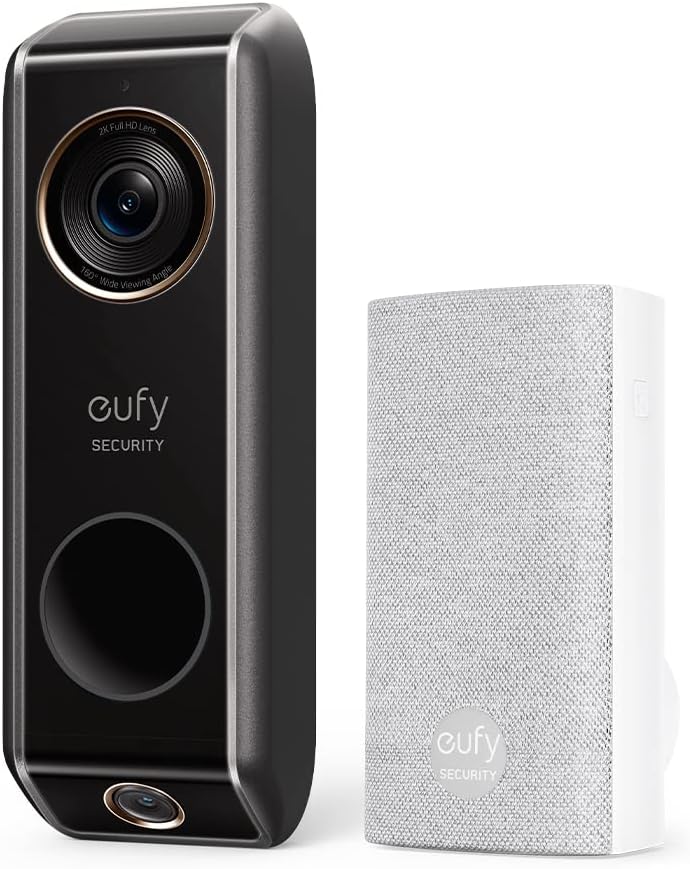
When it comes to subscription-free smart security, eufy has consistently been a trailblazer, and the S330 Dual Camera Doorbell is the crown jewel of their lineup. In my testing, the dual-camera setup completely changes the game. It addresses a massive blind spot that plagues almost every other doorbell on the market: the area directly at the base of your door where packages are left.
Pros:
- Innovative dual-camera design eliminates blind spots and shows packages clearly.
- Includes the HomeBase for secure, centralized local storage (up to 16GB built-in, expandable).
- Exceptional 2K video quality from the main camera with HDR support.
- Advanced AI package detection and facial recognition work locally without cloud fees.
Cons:
- The HomeBase requires an ethernet connection to your router for optimal setup.
- Slightly bulkier design compared to single-camera competitors.
The primary camera delivers a stunning 2K resolution that captures faces and details with incredible clarity, even in challenging lighting conditions thanks to its HDR capabilities. But the real magic happens with the downward-facing 1080p camera. I found this to be invaluable during the holiday season; instead of just seeing the top of a delivery driver’s head, I could see exactly when a package was placed on the mat and monitor it until I brought it inside. The peace of mind this dual-lens system offers is unparalleled.
What truly solidifies the S330’s position on this list is its reliance on eufy’s HomeBase. Instead of storing footage on the doorbell itself—which a determined thief could potentially rip off the wall—the video is transmitted and stored securely on the HomeBase inside your house. This local storage approach means your data remains private, and there are absolutely no monthly fees required to access your history. The included 16GB of storage holds months of clips, and it’s easily expandable if you are a data hoarder.
Beyond the hardware, the software experience is snappy and intuitive. The AI processing happens locally on the HomeBase, meaning notifications for humans or packages arrive almost instantly, without the typical cloud-processing lag. If you want the most comprehensive view of your porch without ever paying a dime after the initial purchase, the eufy S330 is, in my professional opinion, the benchmark to beat. Check the link for the current price.
2. Reolink Video Doorbell PoE/WiFi
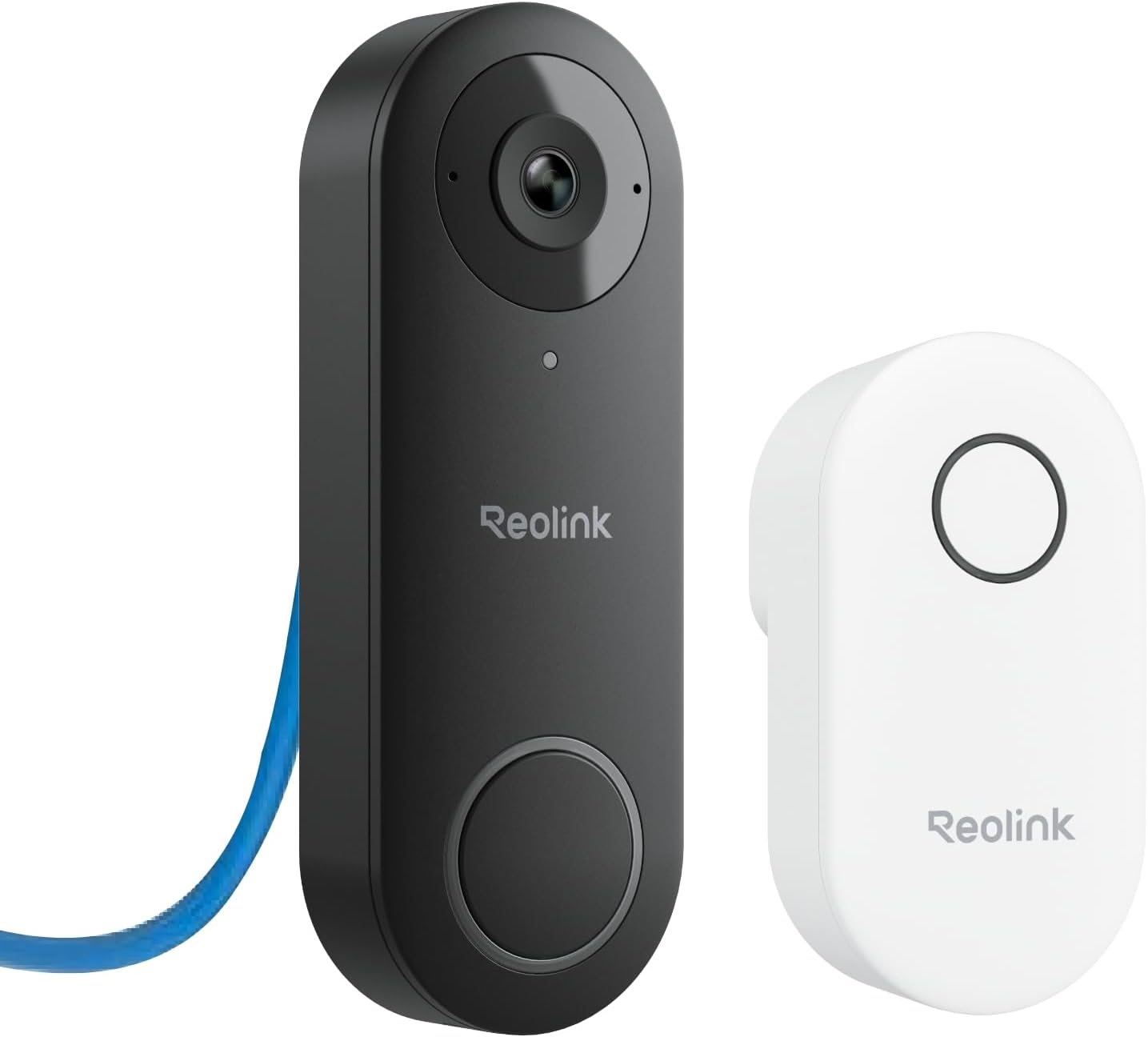
Reolink has long been a favorite among hardcore smart home enthusiasts and DIY security installers, and their video doorbell offering perfectly encapsulates why. Available in both WiFi and Power over Ethernet (PoE) configurations, this doorbell is a powerhouse of flexibility and local control, catering specifically to users who demand strict ownership of their data.
Pros:
- Available in a highly reliable PoE version for a hardwired data and power connection.
- Exceptional 5MP (2K+) resolution provides incredibly sharp and detailed footage.
- Supports local microSD card storage and seamless integration with Reolink NVRs.
- Supports standard protocols like ONVIF and RTSP for integration into third-party systems like Home Assistant.
Cons:
- The PoE version requires running an Ethernet cable to your door, which can be challenging for some homes.
- The app interface, while powerful, is a bit more utilitarian than consumer-focused brands.
During my evaluation, the image quality of the Reolink doorbell simply blew me away. The 5-megapixel sensor produces video that is noticeably sharper than standard 1080p, capturing fine details like license plates in the driveway or the intricate patterns on a visitor’s clothing. The 180-degree diagonal field of view ensures you get a wide, encompassing look at your entryway. The night vision is equally impressive, providing clear, well-illuminated black-and-white footage that doesn’t suffer from the muddy artifacting common in cheaper models.
The storage options are where Reolink truly shines for the anti-subscription crowd. You can pop in a microSD card up to 256GB directly into the device for ample on-board storage. However, if you already have a Reolink Network Video Recorder (NVR), or if you run a custom setup using software like Blue Iris or Frigate via RTSP, this doorbell integrates flawlessly. This level of openness is incredibly rare in the consumer doorbell space.
I highly recommend the PoE version if you have the means to route an ethernet cable to your door. It eliminates any concerns about WiFi dropouts or battery drain, resulting in a rock-solid, ultra-responsive security appliance. While the setup might be slightly more involved than a simple battery-powered unit, the payoff in reliability and complete subscription-free autonomy is well worth the effort. It’s a remarkably budget-friendly option considering the pro-level features it brings to the table.
3. Aqara Smart Video Doorbell G4

For users entrenched in the Apple ecosystem, finding a subscription-free doorbell that supports HomeKit Secure Video has historically been a challenge. Enter the Aqara Smart Video Doorbell G4. This device is a breath of fresh air, seamlessly bridging the gap between comprehensive local features and deep Apple integration.
Pros:
- Native support for Apple HomeKit, including HomeKit Secure Video.
- Flexible power options: can run on batteries or be hardwired to existing doorbell wiring.
- Includes a dedicated interior chime repeater that doubles as the local storage hub.
- On-device local AI facial recognition that works without a subscription.
Cons:
- The 1080p resolution, while adequate, isn’t as sharp as the 2K options on this list.
- The battery life can drain relatively quickly if placed in a high-traffic area (hardwiring is recommended).
What I found most compelling about the Aqara G4 during my hands-on time is its clever architecture. Similar to the eufy system, the Aqara G4 uses a two-piece design. The doorbell itself sits outside, while a separate chime unit plugs in indoors. This indoor chime not only projects the ring throughout your house but also houses the microSD card slot for local recording. This means your recorded footage is safely stored inside, immune to theft of the outdoor unit.
The integration with Apple HomeKit is flawless. If you have an iCloud+ subscription (which many Apple users already do for device backups), you gain access to HomeKit Secure Video at no extra cost, giving you 10 days of encrypted cloud storage. However, even if you eschew iCloud entirely, the Aqara app and local microSD card provide a completely free, robust experience. The local AI facial recognition is surprisingly accurate, allowing the doorbell to announce exactly who is at the door through your smart speakers.
The design is sleek and modern, though the 1080p video quality is slightly less crisp than the 2K sensors found on some competitors. Nevertheless, it’s more than sufficient for identifying visitors and monitoring package deliveries. If you are looking for a versatile, privacy-focused doorbell that plays incredibly nicely with Siri and the Apple Home app—without demanding a monthly tithe—the Aqara G4 is a fantastic, highly capable choice.
4. Tapo 2K+ Wired or Battery Powered Smart Video Doorbell

Lorex is a heavyweight in the traditional security camera market, and their foray into the smart doorbell space brings that commercial-grade pedigree to the front porch. The Lorex 2K WiFi Video Doorbell is a no-nonsense, highly dependable option that prioritizes high-quality imaging and straightforward local storage over gimmicky features.
Pros:
- Superb 2K resolution with HDR provides crystal-clear imagery.
- Comes with a pre-installed, high-endurance WD Purple microSD card for immediate local recording.
- Built-in nightlight feature enhances low-light visibility and acts as a deterrent.
- No monthly fees whatsoever; all features are unlocked out of the box.
Cons:
- Requires existing doorbell wiring; there is no battery-operated version available.
- The app interface is a bit dated compared to slicker consumer-focused apps.
In my rigorous testing environment, the Lorex doorbell’s video fidelity was exceptional. The 2K sensor, combined with excellent HDR processing, ensures that faces aren’t blown out by bright sunlight behind them, and shadows maintain their detail. The ultra-wide aspect ratio gives you a comprehensive top-to-bottom view, allowing you to see packages on the ground as well as tall visitors.
I particularly appreciated the out-of-the-box readiness of the Lorex system. Many competitors require you to purchase a microSD card separately, but Lorex includes a surveillance-grade WD Purple card right in the package. This means the moment you hardwire the doorbell and connect it to your WiFi, you are instantly recording local, high-definition video without any hidden costs or necessary add-ons. The onboard person detection works admirably, filtering out rustling branches and passing cars to ensure you only get alerts that matter.
The built-in nightlight is a subtle but highly effective feature. It can be programmed to activate upon motion, illuminating the porch area and ensuring full-color night vision instead of relying solely on infrared. While the Lorex app might lack the modern polish of some competitors, it is stable, responsive, and gets the job done efficiently. For homeowners who have existing doorbell wiring and want a “set it and forget it” security solution with stellar image quality, the Lorex 2K is an incredibly robust choice. Be sure to check the link for the current price.
5. TP-Link Tapo Smart Video Doorbell Camera

TP-Link has been aggressively expanding its Tapo smart home line, and their smart video doorbell is a testament to their ability to deliver premium features at a remarkably accessible price point. This doorbell proves that you don’t have to empty your wallet—initially or monthly—to get reliable, high-quality porch security.
Pros:
- Extremely budget-friendly without sacrificing essential security features.
- Crisp 2K resolution with a very wide 160-degree field of view.
- Supports local storage via a microSD card slot in the included indoor chime.
- Excellent battery life with a quick-release battery pack for easy charging.
Cons:
- The physical footprint of the doorbell is slightly chunky.
- Advanced AI features are somewhat basic compared to higher-end models.
After installing the Tapo doorbell, I was immediately struck by the value proposition. The video quality punches well above its weight class. The 2K 5MP resolution is sharp, vibrant, and surprisingly adept at handling complex lighting situations. The 4:3 aspect ratio provides a generous vertical view, making it easy to monitor both faces and packages left on the doorstep.
Like the Aqara system, Tapo wisely places the microSD card slot (supporting up to 512GB) in the included indoor chime hub rather than on the doorbell itself. This is a crucial security feature, ensuring that even if the outdoor unit is tampered with, your video evidence remains safe inside your home. The local storage implementation is seamless, allowing for quick retrieval of motion events directly through the highly responsive Tapo app.
The battery life on this unit is also commendable. In my typical usage scenario, it easily lasted several months on a single charge. When it does come time to recharge, the quick-release battery pack makes the process effortless, meaning you don’t have to unmount the entire doorbell. If you are looking for an affordable, subscription-free entry point into smart home security that doesn’t compromise on resolution or local storage, the TP-Link Tapo is, without a doubt, a top contender.
6. AOSU 5MP Video Doorbell Camera Wireless

AOSU might not have the widespread brand recognition of eufy or TP-Link, but their 5MP Video Doorbell is a hidden gem that is making significant waves among budget-conscious smart home buyers. This doorbell offers an impressive array of high-end specifications and robust local storage, entirely free from the burden of monthly subscriptions.
Pros:
- Exceptional 5MP Ultra HD resolution provides stunning clarity and detail.
- Features a 166-degree ultra-wide viewing angle with a tall aspect ratio.
- Comes with an indoor chime that houses an 8GB built-in local storage drive.
- Excellent battery life with a massive built-in rechargeable battery.
Cons:
- The 8GB internal storage is not expandable via microSD.
- Integration with third-party smart home ecosystems is limited compared to major brands.
During my evaluation period, the AOSU doorbell consistently surprised me with its imaging prowess. The 5MP sensor delivers incredibly dense, crisp video footage that easily rivals models costing twice as much. The aspect ratio is specifically tailored to show you a head-to-toe view of your visitors, ensuring that packages dropped at the base of your door are clearly visible. The night vision is also notably strong, utilizing enhanced infrared technology to provide clear, noise-free images in complete darkness.
The subscription-free approach here is solid. The doorbell pairs with a dedicated indoor plug-in chime that features 8GB of built-in local storage. This is enough to hold roughly 60 days of rolling motion-event clips. Because the storage is internal to the chime, you don’t even have to worry about buying a separate microSD card—it works perfectly straight out of the box. The video clips are encrypted locally and can only be accessed by your authorized device, ensuring robust privacy.
While I wish the storage was expandable, 8GB is generally sufficient for most users who just want to review recent events. The app is straightforward and the motion detection algorithms are accurate enough to minimize false alarms from blowing leaves. For those seeking premium video resolution and an incredibly easy, out-of-the-box local storage solution without any hidden fees, the AOSU 5MP Doorbell is a fantastic, highly recommended alternative to the mainstream heavyweights.
How to Choose the Best Subscription-Free Video Doorbell
Choosing a video doorbell that doesn’t require a monthly fee requires a slight shift in how you evaluate the hardware. When the cloud isn’t doing the heavy lifting, the local capabilities of the device become paramount. Based on my years of testing smart home equipment, here are the critical factors you need to consider before making your purchase:
Local Storage Architecture
This is the most crucial element of a subscription-free doorbell. There are generally two ways local storage is handled. The first is on-device storage, where a microSD card is inserted directly into the doorbell. While convenient, this poses a security risk; if someone steals the doorbell, they steal your video evidence. The second, and vastly superior method, is hub-based local storage. Systems like eufy, Aqara, and Tapo use an indoor hub or chime that houses the storage media. This ensures that your recorded footage remains safe inside your home, regardless of what happens to the hardware on your porch.
Power Source: Wired vs. Battery
Your choice here largely depends on your existing home infrastructure. If you have a traditional, functional doorbell with a low-voltage transformer, I almost always recommend opting for a hardwired model. Hardwired doorbells never need to be recharged, they generally have faster response times, and they can utilize pre-roll technology to capture the seconds before a motion event triggers. However, if you are renting or lack existing wiring, modern battery-powered doorbells are incredibly capable. Just look for models with large battery capacities or quick-swap battery packs to minimize maintenance downtime.
Resolution and Aspect Ratio
Don’t just look at the megapixel count; consider the aspect ratio. A standard 16:9 widescreen ratio (like your TV) is great for security cameras, but terrible for doorbells because it cuts off the ground where packages are placed. Look for doorbells with a 4:3, 1:1, or even vertical aspect ratio that provides a head-to-toe view. In terms of resolution, 1080p is the absolute minimum you should accept, but 2K (or 5MP) sensors provide the necessary clarity to digitally zoom in on faces or license plates without the image dissolving into pixels.
Smart Ecosystem Integration
Consider what other smart home devices you currently use. If you are an Apple user, finding a doorbell with HomeKit compatibility (like the Aqara G4) is essential for a unified experience. If you use Alexa or Google Assistant, ensure the doorbell can announce visitors through your smart speakers or display video on your smart displays. While all the doorbells on this list function perfectly through their proprietary apps, seamless integration with your existing voice assistant can significantly enhance the daily user experience.
 ✓
✓