Best Robot Mops for Hardwood Floors and Sticky Kitchen Spills

These five robot mops combine floor-safe controls, stain-focused mopping, smart navigation, and hands-free maintenance for busy American homes.
As an Amazon Associate I earn from qualifying purchases.
Robot mops can keep hardwood floors looking presentable between deeper cleanings, but sticky kitchen spills demand more than a damp cloth dragged across the floor. The useful features are controlled water delivery, mop washing that does not spread yesterday’s grime, strong edge coverage, and software that can return to a problem area.
This list compares five models using the supplied product information. The best fit depends on your flooring, the size and layout of your home, how often you deal with food residue, and how much maintenance you want to handle yourself. No robot should be expected to replace immediate cleanup of a large, wet, sugary, or greasy spill.
Quick comparison
| Model | Best match | Notable mopping approach | Maintenance convenience |
|---|---|---|---|
| roborock Qrevo S5V | Large homes and pet households | Dual spinning mops with adjustable water flow | Self-washing, warm-air drying, auto-emptying, and auto-refilling |
| roborock Qrevo CurvX | Sticky residue and low furniture | Dual spinning mops and hot-water mop washing | Auto-emptying, auto-refilling, hot-water washing, and warm-air drying |
| roborock Saros 10R | Low-clearance spaces and detailed coverage | Dual spinning mops with automatic carpet lifting | Hot-water washing, hot-air drying, auto detergent dispensing, and auto-refilling |
| roborock Q7 M5+ | Simpler routine cleaning | Mopping with three adjustable water-flow settings | Self-emptying for up to 7–9 weeks, according to the supplied listing |
| ECOVACS DEEBOT T80 OMNI | Frequent messes and pet homes | Self-washing OZMO roller mop | Auto-emptying, hot-water washing, hot-air drying, and auto-refilling |
Our picks for hardwood floors and kitchen messes
1. roborock Qrevo S5V: Best balanced option for large homes
The Qrevo S5V is a sensible all-around choice for a home that needs both vacuuming and regular mopping. Its dual spinning mop pads are listed at 200 RPM, and the app provides 30 water-flow levels. That range is useful when moving between sealed hardwood, tile, and areas that need a more damp-focused pass—but hardwood owners should still start conservatively and follow the floor manufacturer’s care instructions.
For kitchen cleanup, the spinning pads are designed to work on stubborn stains, while the FlexiArm mop reaches around furniture legs and toward corners. The robot can also lift the mop 10 millimeters for low-pile carpet. Its dock self-washes the mops, dries them with warm air, empties dust, and refills the water tank. The listing says the dock can support mopping across 3,552 square feet, so this model is especially appealing for larger layouts.
The tradeoff is that the feature-rich dock needs floor space and routine attention to its clean and dirty water systems. The model supports 2.4GHz Wi-Fi only, and buyers should verify clearance around the dock, the app’s current compatibility, and whether its water-flow settings suit their particular hardwood finish.
2. roborock Qrevo CurvX: Best for stubborn kitchen residue

The Qrevo CurvX stands out for homes where kitchen floors regularly collect grease, dried food, or other stubborn residue. Its dock washes the mops with water listed at 80°C, or 176°F, and the product information says the hot water is intended to help dissolve stains and grease. Dual spinning mops and an extendable mop design add mechanical contact instead of relying only on a passive wet pad.
Its 7.98-centimeter profile is designed to reach under low sofas and cabinets, and the retracting range finder helps it navigate spaces with limited overhead clearance. The model also lists a 17-millimeter mop lift for carpet transitions. Reactive AI obstacle recognition is specified to identify 108 object types, which may reduce interruptions in rooms with toys, cables, or pet items.
The main tradeoffs are size, complexity, and the need to confirm that your furniture clearance works with the robot and dock. It supports 2.4GHz Wi-Fi only. A hot-water mop cycle is not a reason to leave a spill sitting on hardwood; wipe up large or wet messes promptly, then use the robot for residue and routine maintenance.
3. roborock Saros 10R: Best for low furniture and edge coverage
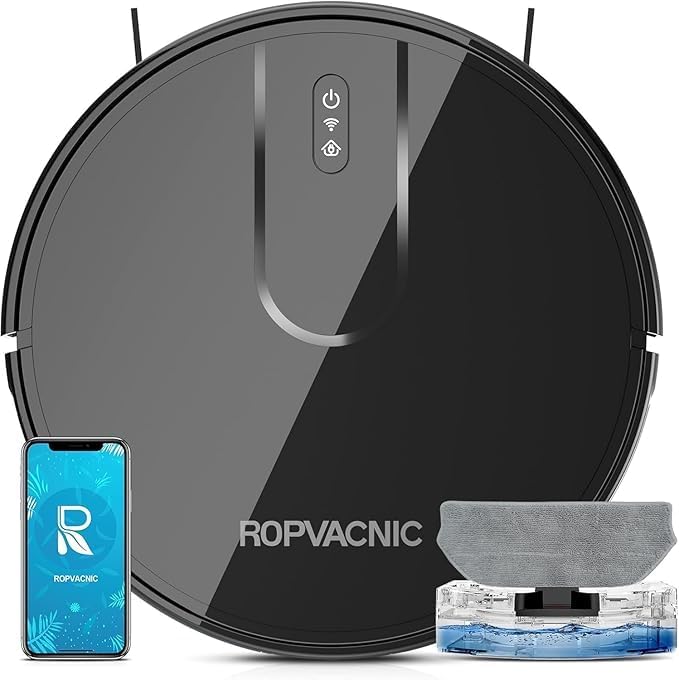
The Saros 10R is the strongest fit for rooms where dust and crumbs hide under beds, sofas, cabinets, and other low-clearance furniture. Its 3.14-inch profile is designed to reach those areas, while the StarSight Autonomous System 2.0 uses 3D sensing for navigation. The FlexiArm side brush and mop extend toward corners and edges, addressing the strip of floor many round robots leave behind.
For mixed flooring, the dual spinning mops and mop bracket lift when carpets are detected. The AdaptiLift chassis is specified to navigate obstacles up to 4 centimeters high, and the dock can wash mops with 176°F water, dry them with 131°F air, refill water, empty dust, dispense detergent, and clean itself. A particularly useful feature for recurring kitchen messes is automatic re-wash and re-mop when the system detects heavily soiled areas.
The tradeoff is that its advanced dock and sensing features may be more than a small apartment needs. The listing also says it supports 2.4GHz Wi-Fi only. Before buying, measure the lowest furniture and check the manufacturer’s hardwood-care guidance for detergent and moisture use.
4. roborock Q7 M5+: Best for a simpler maintenance routine
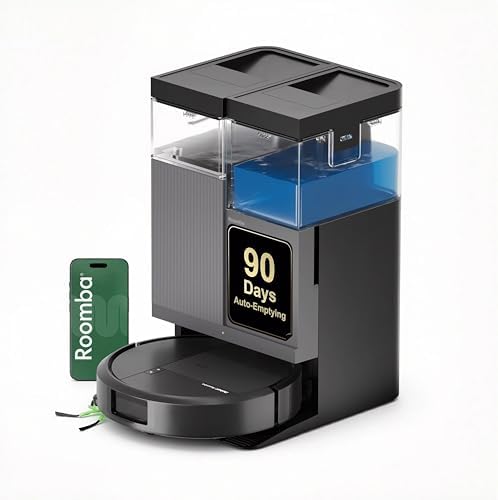
The Q7 M5+ is the comparatively straightforward pick for people who want scheduled vacuuming and mopping without stepping up to the more elaborate hot-water systems above. It combines 10,000Pa suction with mopping and offers three adjustable water-flow settings. That makes it easier to choose a lighter pass for hardwood rather than treating every room the same.
Its RockDock Plus uses a 2.7-liter sealed dust bag, with the listing claiming up to 7–9 weeks of hands-free self-emptying. LiDAR mapping supports room-by-room cleaning, schedules, spot cleaning, and no-go zones through the app. The dual anti-tangle design is also aimed at reducing hair buildup, a practical benefit for homes with pets.
The important limitation is mopping capability: the supplied evidence describes adjustable water flow but does not describe hot-water mop washing, mop drying, or automatic water refilling. That means the owner should expect more hands-on mop care than with the other dock-focused choices. Verify the replacement consumables, Wi-Fi requirements, and whether the available water settings are appropriate for your hardwood.
5. ECOVACS DEEBOT T80 OMNI: Best for a continuously refreshed mop

The DEEBOT T80 OMNI takes a different approach with an OZMO roller mop that washes itself in real time at 220 RPM while removing dirty water. That design is aimed at reducing the cross-contamination associated with repeatedly dragging a dirty pad across the floor, making it worth considering for kitchens where the cleaning surface changes from one area to the next.
TruEdge technology dynamically extends the roller mop toward walls and furniture legs. The robot also lists 18,000Pa suction, ZeroTangle 3.0, carpet-first cleaning, and AIVI 3D 3.0 navigation for recognizing cables, toys, pets, and furniture. Its OMNI Station auto-empties dust for up to 90 days, according to the supplied listing, washes mops with hot water, dries them with hot air, and refills water automatically.
The tradeoff is that a roller-mop system and large OMNI Station add another layer of maintenance and space planning. “Streak-free” is a product claim, not a guarantee for every finish or spill. Confirm the recommended cleaning solution, moisture limits for your hardwood, dock dimensions, and app compatibility before ordering.
How to choose a robot mop for hardwood
- Prioritize water control. Adjustable flow is more useful than a single aggressive wet setting. Start with the lowest effective moisture level and follow the flooring manufacturer’s instructions.
- Look for mop lifting. Automatic lifting helps prevent a damp mop from crossing onto rugs and carpets, but confirm the listed lift height against your flooring setup.
- Consider mop hygiene. Self-washing, dirty-water removal, hot-water washing, and warm-air drying can reduce hands-on work, though tanks, trays, brushes, and filters still need care.
- Measure clearance. Check furniture gaps, thresholds, dock space, and the route to the dock. LiDAR or AI navigation cannot compensate for a robot that physically cannot fit.
- Use no-go zones thoughtfully. Keep the robot away from loose cables, pet bowls, delicate rugs, and areas where standing water could damage hardwood.
What to do about sticky kitchen spills
Blot or wipe up a fresh spill first, especially if it contains a lot of liquid, oil, syrup, or food particles. Remove hard debris so it does not smear or enter the robot. After the area is safe for automated cleaning, use a targeted room or zone run with a conservative water setting. A second pass may help with residue, but do not assume the robot can identify every type of spill or protect every hardwood finish.
FAQ
Can a robot mop safely clean hardwood floors?
It can be suitable for some sealed hardwood floors, but compatibility depends on the finish, moisture tolerance, and cleaning products allowed by the flooring manufacturer. Use conservative water settings and avoid leaving standing moisture behind.
Which pick is most focused on sticky residue?
The Qrevo CurvX has the clearest supplied emphasis on stubborn stains and grease, along with hot-water mop washing. The DEEBOT T80 OMNI’s continuously washed roller mop is another compelling option for kitchens. Neither should replace immediate cleanup of a large spill.
Do self-cleaning docks eliminate maintenance?
No. They can reduce how often you wash mop pads or empty dust, but owners still need to replenish or empty water, inspect brushes, clean sensors and dock areas, and replace consumables as directed.
 ✓