Where to Place a Dehumidifier in a Basement
Choose the best basement dehumidifier location for airflow, drainage, electrical safety, coverage, and reliable humidity control.
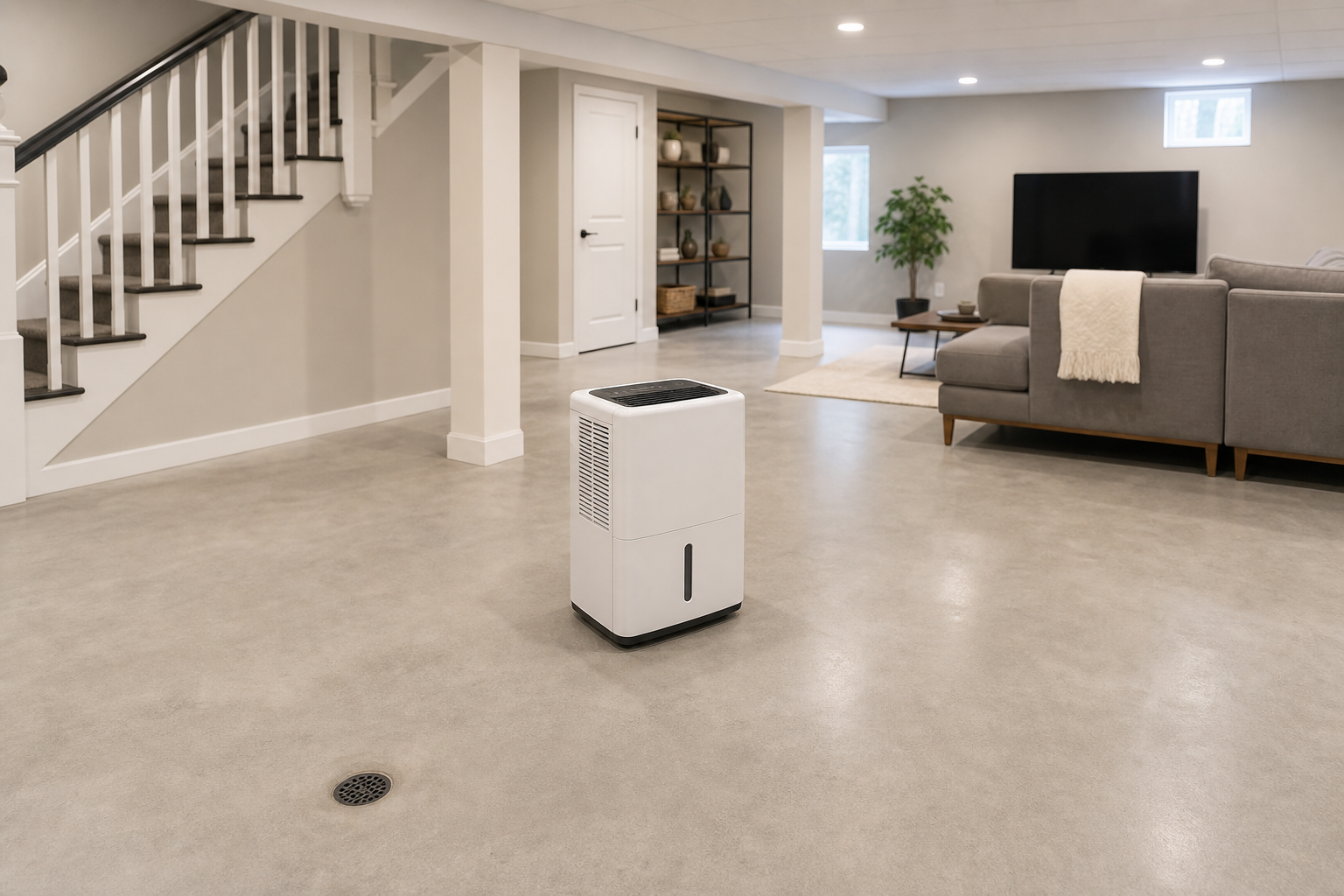
The best place for a dehumidifier in a basement is a central, open area where air can move freely through the intake and exhaust. Set it on a stable, level surface, maintain the clearance required by its manual, keep it away from walls and stored items, and use a properly grounded outlet that is not exposed to water.
If the basement has several closed rooms, place the unit near the largest moisture source or use open doors and air circulation to help humid air reach it. A single portable dehumidifier cannot work effectively through sealed doors, blocked vents, or across a basement that exceeds its rated coverage.
Drainage matters as much as airflow. A bucket setup needs easy access for emptying, while continuous drainage requires an approved hose route, adequate slope or a compatible pump, and a suitable drain. Never create a trip hazard or run electrical cords through damp areas.
Start Near the Moisture Source
Look for condensation, musty odors, cool foundation walls, damp laundry, or moisture entering near a stairwell or utility area. Placing the dehumidifier reasonably close to the source helps it capture humid air, but the unit should never sit in standing water or directly beneath a leak.
A dehumidifier manages airborne moisture; it does not repair foundation seepage, plumbing leaks, poor grading, or missing vapor barriers. Correct active water problems first. Persistent dampness or suspected mold may require a building or remediation professional.
Leave Room for Airflow
Identify the intake and exhaust grilles and follow the model’s required spacing. Some units take air from the rear and discharge upward, while others use side panels. A central placement is helpful only when furniture, boxes, curtains, and walls do not block those paths.
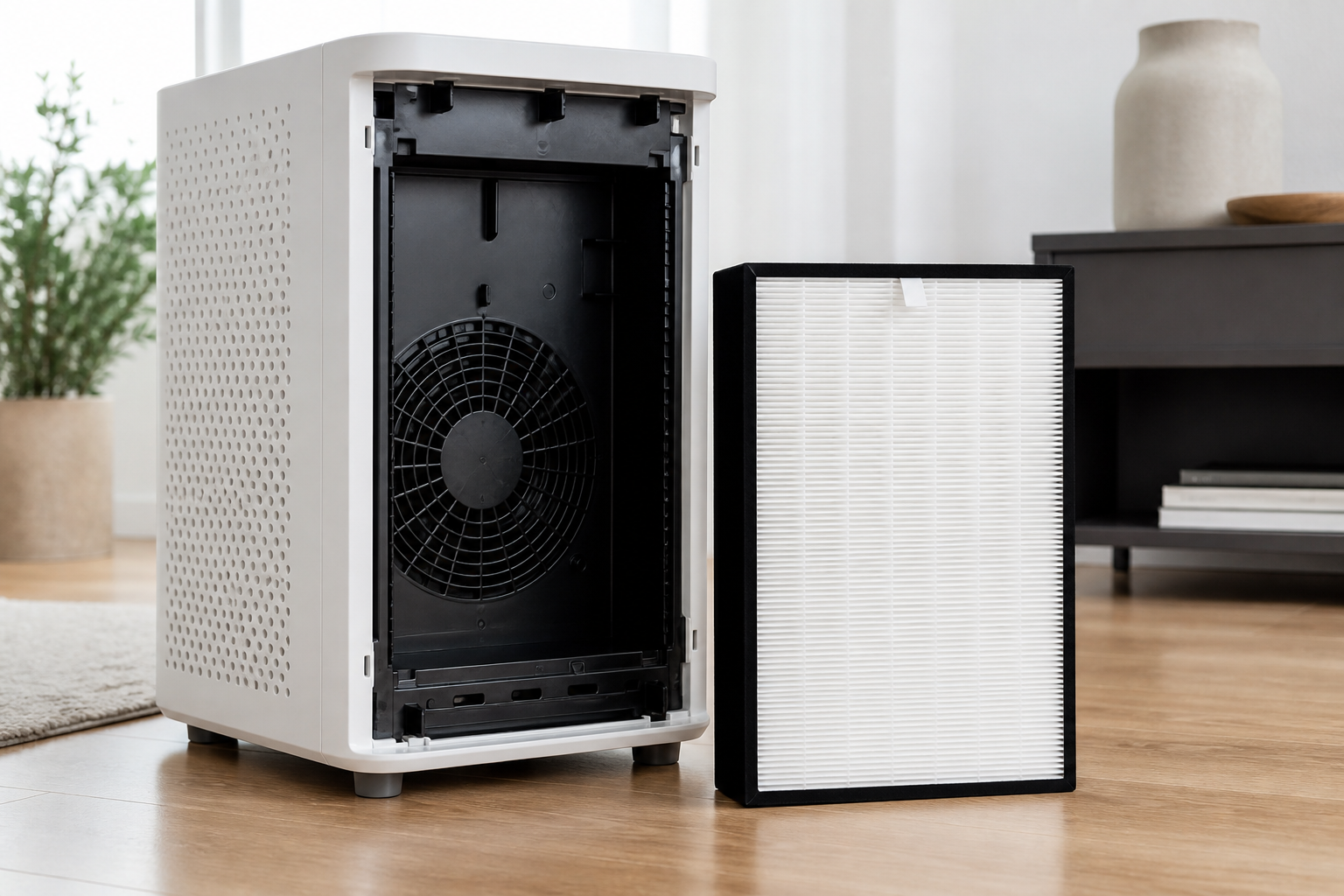
Avoid tucking the machine into a closet or under a workbench unless the space and product are designed for it. Clean the filter on schedule because restricted airflow lowers moisture removal and can increase operating time.
- Keep every grille open and unobstructed.
- Use the manufacturer’s minimum wall clearance.
- Open interior doors when one unit serves multiple spaces.
- Keep stored fabrics and cardboard away from the machine.
Choose a Level, Stable Surface
Set a portable dehumidifier upright on a firm floor so the bucket sensor and refrigerant system operate correctly. Uneven flooring can cause vibration, noise, or drainage trouble. Use only a platform or stand approved for the unit’s weight and movement.
If the basement has flooded, do not place or power the appliance until electrical and water hazards have been professionally addressed. A unit is not designed to operate in standing water.
Plan Bucket or Continuous Drainage
For bucket collection, choose a location you can reach without carrying water across obstacles or stairs. The machine should stop automatically when full, but test and clean the float as directed. Empty the bucket before slime or odors develop.
For gravity drainage, the hose must run continuously downhill without kinks to an approved floor drain or condensate destination. If the drain is higher than the outlet, use a model with a compatible pump or an approved external condensate pump. Secure the hose so it cannot slip out and discharge onto the floor.
Use Electrical Connections Safely
Plug the dehumidifier into a suitable grounded wall outlet as directed by the manual. Avoid extension cords and overloaded power strips. Keep the cord, plug, and outlet dry, and position the cord where it will not be crushed, walked on, or contacted by the drain hose.
Basement outlet requirements vary by location and code. If an outlet is loose, warm, discolored, ungrounded, or near recurring water, stop and consult a qualified electrician. Do not remove the grounding pin.
Finished Versus Unfinished Basements
In a finished basement, a central family-room location can work if noise and airflow are acceptable. Keep doors open to adjacent rooms during operation, and protect the unit from children and pets without enclosing it.
In an unfinished basement, positioning near the damp foundation side or laundry area may be more effective, provided dust, workshop debris, and heat sources do not interfere. Keep the machine away from furnaces, water heaters, and combustion-air openings according to all equipment instructions.
Should the Unit Be Near the Sump Pump?
A sump area can offer convenient drainage and may coincide with a moisture source. It is suitable only when the dehumidifier remains on a dry, stable surface with safe electrical access and adequate ventilation. Do not balance the unit on the sump cover or allow a hose to obstruct pump service.
Make sure continuous drainage cannot backflow and that the hose endpoint follows local requirements. Periodically confirm that water is actually reaching the drain instead of leaking at a connection.
Set the Humidity and Measure Results
Place a separate hygrometer several feet from the dehumidifier and away from exterior walls to evaluate the room rather than the dry exhaust stream. Many homes target roughly 30% to 50% relative humidity, but comfort, season, building conditions, and manufacturer guidance matter.
Extremely low settings make the machine run longer and use more energy without necessarily improving the basement. If humidity remains high after doors are opened, filters are clean, and drainage works, the unit may be undersized or moisture entry may be too great.
Move It Only After Turning It Off
Portable does not mean the unit should be moved while operating. Turn it off, unplug it, empty the bucket, and keep it upright. If the appliance was tilted, follow the manual’s required waiting time before restarting so refrigerant and oil can settle.
Test a new location for several days and compare humidity at consistent times. This evidence is more useful than moving the dehumidifier every few hours.
Common Placement Mistakes
The most common mistakes are pushing the unit against a wall, surrounding it with storage, placing it inside a closed room while expecting whole-basement coverage, and running a drain hose uphill without a pump. Each reduces performance or creates water risk.
Other hazards include placing it on carpet when prohibited, using a damaged extension cord, locating it under a leak, and ignoring a full or dirty bucket. A clear, dry service area makes maintenance more likely to happen.
Frequently Asked Questions
Should a basement dehumidifier be in the center of the room?
A central open location is often effective, but proximity to the moisture source, drainage, safe power, and the unit’s airflow pattern can be more important.
Can one dehumidifier cover several basement rooms?
It can help when doors stay open and the capacity matches the combined area. Closed rooms may need separate airflow or another unit.
Can I drain a dehumidifier into a sump pit?
Only if the manufacturer and local requirements permit it and the hose is secure, slopes correctly, and does not interfere with the sump pump.
Should a dehumidifier run all the time?
A humidistat-controlled unit cycles as needed. Continuous running may indicate a very low setting, undersized capacity, blocked airflow, cold conditions, or ongoing moisture entry.
Final Thoughts
Place a basement dehumidifier in a dry, open location near the main moisture source, with the exact clearance its manual requires. Combine that position with safe grounded power, a reliable drainage plan, and open pathways for room air.
Measure humidity away from the exhaust and adjust after several days. If the unit cannot control moisture despite correct placement and capacity, investigate the building’s water source rather than simply lowering the setting.
 ✓
✓